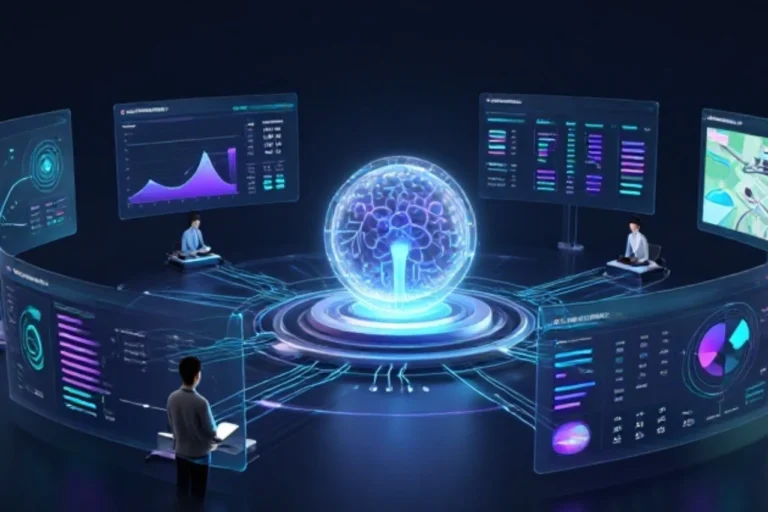
Artificial intelligence is reshaping how businesses attract customers, promote products, and build lasting relationships in the digital marketplace. As online shopping continues to evolve, brands are adopting smarter technologies to understand consumer behaviour and deliver more relevant experiences. In 2026, AI is transforming e-commerce marketing strategies by helping businesses make faster decisions, improve campaign performance, and create personalized shopping journeys.
From intelligent product recommendations to automated advertising and predictive analytics, AI is becoming an essential part of the modern MarTech ecosystem. Consequently, businesses are moving beyond traditional marketing approaches and embracing data driven marketing to improve customer engagement and increase revenue.
Personalization has become a major factor in successful e-commerce marketing. Today’s consumers expect shopping experiences that reflect their interests, preferences, and previous interactions. AI helps brands meet these expectations by analysing browsing patterns, purchase histories, search behaviour, and customer feedback.
Using these insights, marketing platforms can recommend relevant products, personalize website content, and deliver targeted promotional messages. For example, an online fashion retailer can suggest products based on previous purchases, seasonal preferences, and browsing activity.
Moreover, AI powered personalization allows businesses to create more effective customer experience strategies across multiple digital channels. Rather than delivering identical messages to every shopper, brands can communicate with audiences through content and offers that match their individual needs.
Predictive Analytics Is Making Marketing More Data Driven
Understanding what customers might purchase next is becoming increasingly valuable for online retailers. AI powered predictive analytics helps businesses identify purchasing patterns, forecast demand, and anticipate changes in consumer preferences.
These capabilities support better marketing decisions by allowing companies to identify high value customers, predict customer churn, and determine which campaigns are likely to generate stronger results. Therefore, marketing teams can allocate budgets more effectively and reduce unnecessary advertising expenses.
Additionally, data driven marketing enables businesses to measure campaign performance using real time insights. Instead of relying entirely on historical reports, marketers can adjust their strategies based on changing customer behaviour and emerging opportunities.
AI Automation Is Improving Advertising Performance
Managing digital advertising campaigns across multiple platforms requires considerable time and resources. AI is simplifying this process through automated bidding, audience segmentation, creative testing, and campaign optimization.
Advertising platforms increasingly use machine learning to analyse campaign performance and identify audiences with a higher likelihood of converting. As a result, businesses can improve advertising efficiency while reaching potential customers with more relevant messages.
Furthermore, generative AI is helping marketing teams develop advertising copy, product descriptions, promotional visuals, and social media content. These digital marketing innovations allow teams to experiment with different creative approaches and accelerate content production.
However, human oversight remains important. Marketers must ensure that AI generated content reflects brand identity, communicates accurate information, and maintains a consistent customer experience.
Conversational AI Is Strengthening Customer Engagement
Customer support is another area experiencing significant transformation. AI powered chatbots and virtual shopping assistants are helping e-commerce businesses respond to customer questions, recommend products, and guide shoppers throughout their purchasing journeys.
These tools can provide assistance around the clock, making it easier for customers to find product information, understand delivery options, and resolve common issues. Meanwhile, more advanced conversational systems can use customer context to deliver relevant responses instead of relying entirely on predefined scripts.
Consequently, conversational AI is becoming an important part of brand engagement strategies. Businesses can improve accessibility, reduce response times, and create more connected shopping experiences across websites, mobile applications, and messaging platforms.
Omnichannel Marketing Is Becoming More Intelligent
Modern consumers interact with brands through websites, social media, email, mobile applications, and online marketplaces. Maintaining consistent communication across these channels is essential for building customer trust.
AI helps connect these interactions by analysing customer journeys and identifying opportunities for personalized communication. For instance, a shopper who views a product on a website might receive a relevant email recommendation or a personalized advertisement later.
Moreover, intelligent marketing automation platforms help businesses coordinate campaigns across different channels. This creates a more consistent experience while allowing marketing teams to understand how individual interactions contribute to purchasing decisions.
As a result, omnichannel marketing is becoming more measurable, responsive, and customer focused.
Privacy and Responsible AI Are Becoming Business Priorities
Although AI offers significant marketing opportunities, businesses must also address data privacy, transparency, and responsible technology use. Personalization depends on customer information, making it important for companies to collect and process data responsibly.
Brands should prioritize consent based data collection, secure customer information, and communicate clearly about how personal data is used. Additionally, marketers should regularly review AI generated recommendations and automated decisions to identify inaccurate outputs or unintended bias.
These practices help businesses build customer confidence while supporting sustainable marketing innovation. Trust will remain an important competitive advantage as AI becomes more deeply integrated into e-commerce operations.
The Future of AI in E-commerce Marketing
Looking ahead, AI will continue to influence product discovery, campaign management, customer engagement, and marketing analytics. Emerging capabilities such as agentic AI could help businesses coordinate complex marketing activities, analyse campaign results, and recommend strategic adjustments with greater independence.
For marketers, the opportunity lies in combining technology insights with creativity, customer understanding, and strategic thinking. Businesses that invest in reliable AI tools, connected marketing platforms, and strong data foundations will be better positioned to respond to changing consumer expectations.
Ultimately, successful e-commerce marketing in 2026 will depend not simply on adopting AI but on using it to create meaningful customer relationships, improve decision making, and deliver measurable business value.
Explore the latest marketing technology insights, digital innovations, and industry developments with MarTechInfoPro.com.