Marketing teams have more customer information than ever before. Every website visit, email interaction, content download, product inquiry, and social engagement can reveal something about a potential buyer. However, collecting information is only the beginning. The real opportunity comes from turning that information into meaningful customer interactions.
This is where Data Driven Lead Nurturing can make a significant difference. Instead of treating every prospect in the same way, marketers can use behavioral and customer data to understand where individuals are in their buying journey. As a result, businesses can deliver more relevant experiences while using their marketing budgets more efficiently.
Why Lead Nurturing Matters in Modern Marketing
Not every prospect is ready to make a purchase immediately. Some may still be researching their options, while others could be comparing competitors or waiting for the right opportunity.
Therefore, sending the same promotional message to everyone can create unnecessary noise. Effective lead nurturing allows businesses to maintain meaningful communication while gradually moving prospects toward a purchase decision.
Moreover, modern customers expect brands to understand their interests. Personalized communication can make interactions more useful and can strengthen the relationship between a prospect and a company.
Turning Customer Data Into Marketing Intelligence
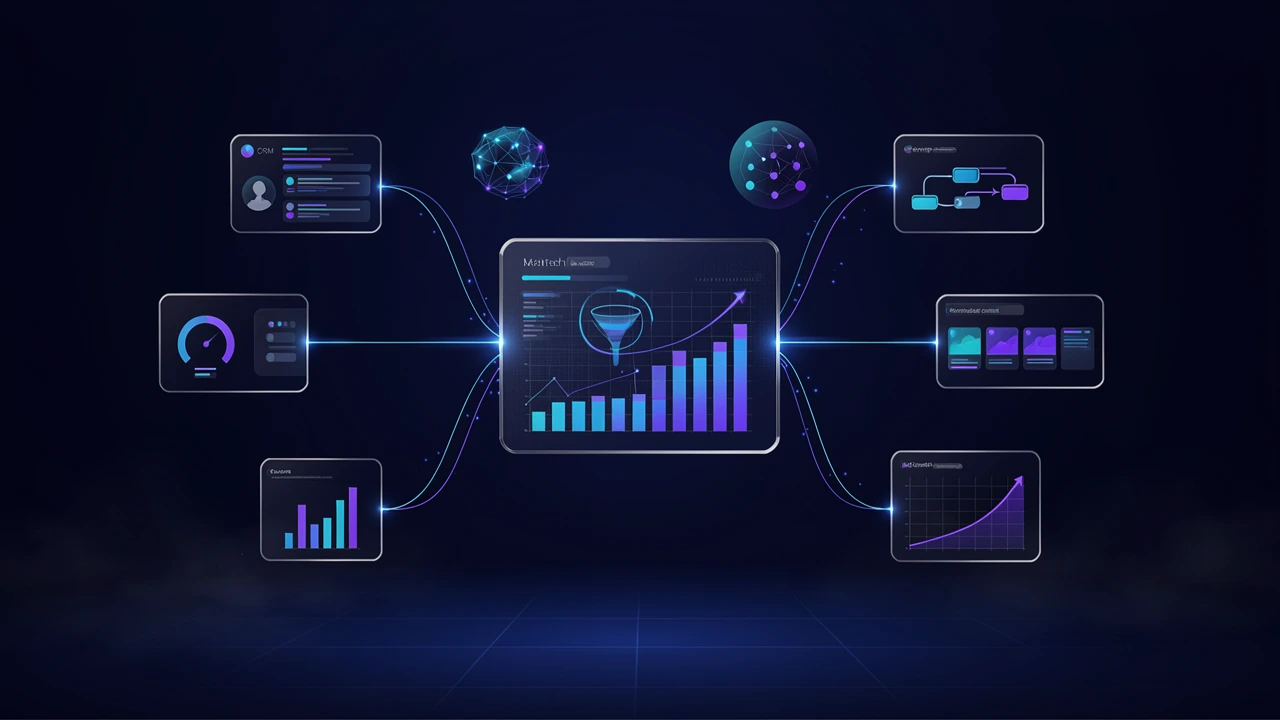
Modern MarTech platforms can collect and organize information from multiple customer touchpoints. Website analytics, CRM systems, email platforms, advertising tools, and customer engagement platforms can work together to create a broader view of customer behavior.
Consequently, marketers can identify patterns that may otherwise remain hidden.
For example, a prospect who repeatedly visits product pages and downloads detailed resources may demonstrate stronger buying intent than someone who only reads a general blog post. Understanding this difference allows marketing teams to adjust communication based on actual behavior.
This approach is central to data driven marketing because decisions are based on measurable customer signals rather than assumptions.
Personalization is becoming one of the most important elements of modern customer engagement. However, effective personalization requires more than adding a person’s name to an email.
Data can help marketers understand interests, content preferences, previous interactions, and purchase intent. Therefore, businesses can create messages that are more relevant to each stage of the customer journey.
For instance, a new prospect might receive educational content, while an engaged prospect could receive product comparisons or case studies. Similarly, a prospect showing strong purchase intent may benefit from a consultation or product demonstration.
As a result, marketing communication becomes more timely and useful.
Automation Makes Nurturing More Efficient
Marketing automation has changed how businesses manage large numbers of prospects. Instead of manually tracking every interaction, marketers can create automated journeys based on specific customer behaviors.
Meanwhile, modern platforms can trigger messages when prospects perform particular actions. A content download might initiate an educational email sequence, while repeated product engagement could trigger a more sales focused communication.
Furthermore, automation helps marketing teams maintain consistency. It reduces repetitive work and allows professionals to spend more time developing creative campaigns and improving customer experiences.
Better Customer Experience Through Relevant Communication
Customer experience is closely connected with successful lead nurturing. Prospects do not want to feel like they are being pushed through a generic sales funnel.
Instead, they expect brands to understand their needs and provide useful information at the right moment.
This is why Customer experience strategies increasingly depend on customer data. When businesses understand what prospects need, they can create smoother journeys across websites, emails, social channels, and sales interactions.
In contrast, poorly targeted communication can create frustration and encourage prospects to disengage.
Connecting Lead Nurturing With Marketing ROI
Improving marketing ROI requires more than generating a high number of leads. Businesses need to understand which activities contribute to meaningful customer outcomes.
Data can help marketers measure engagement, conversion rates, customer acquisition costs, and revenue contribution. Therefore, teams can identify which campaigns are producing valuable opportunities and which activities need improvement.
Additionally, connecting marketing automation with CRM platforms can help businesses follow prospects from their first interaction through the sales process.
As a result, marketing teams can gain a clearer understanding of how their efforts influence revenue.
The Role of AI and Digital Innovation
Artificial intelligence is adding another layer of intelligence to modern lead nurturing. AI tools can analyze customer behavior, identify patterns, predict engagement, and support content personalization.
Moreover, AI can help marketers determine which prospects are more likely to respond to specific messages.
These capabilities are part of broader Digital marketing innovations that are changing the MarTech ecosystem. As platforms become more intelligent, marketers can move from reactive campaigns toward predictive customer engagement.
Technology insights also show how AI, automation, analytics, and customer data are increasingly becoming connected within modern marketing operations.
Stronger Brand Engagement Through Relevant Content
Content remains an important part of the nurturing journey. However, the focus is shifting from producing large amounts of content to delivering content that matches customer needs.
For example, early stage prospects may need educational articles, while more engaged prospects may respond better to research, product information, or customer stories.
Consequently, Brand engagement strategies can become more effective when content is connected to actual customer behavior.
Similarly, Marketing trends analysis shows the growing importance of personalized experiences, predictive analytics, and automated engagement in modern marketing strategies.
What Marketers Should Focus on Next
The future of lead nurturing will depend on how effectively businesses connect data, technology, content, and customer experience. Simply collecting more information will not create better marketing outcomes. Companies need to understand which signals matter and how those signals can improve customer interactions.
Marketers should also regularly evaluate whether their campaigns are producing meaningful engagement and qualified opportunities. In addition, teams should maintain strong data governance and respect customer privacy while using advanced technologies.
Ultimately, Data Driven Lead Nurturing works best when technology supports genuine customer value. Businesses that combine accurate insights with relevant communication can create stronger relationships while improving the efficiency of their marketing investment.
Practical Insights for the Future of MarTech
The next generation of marketing will increasingly focus on understanding intent rather than simply counting interactions. Businesses that connect CRM data, behavioral analytics, automation, and AI can create more responsive customer journeys.
At the same time, marketers should avoid over automation. Human creativity, empathy, and strategic thinking will remain essential for building authentic customer relationships.
Explore more expert Technology insights, MarTech developments, and Digital marketing innovations with MarTechInfoPro.com.