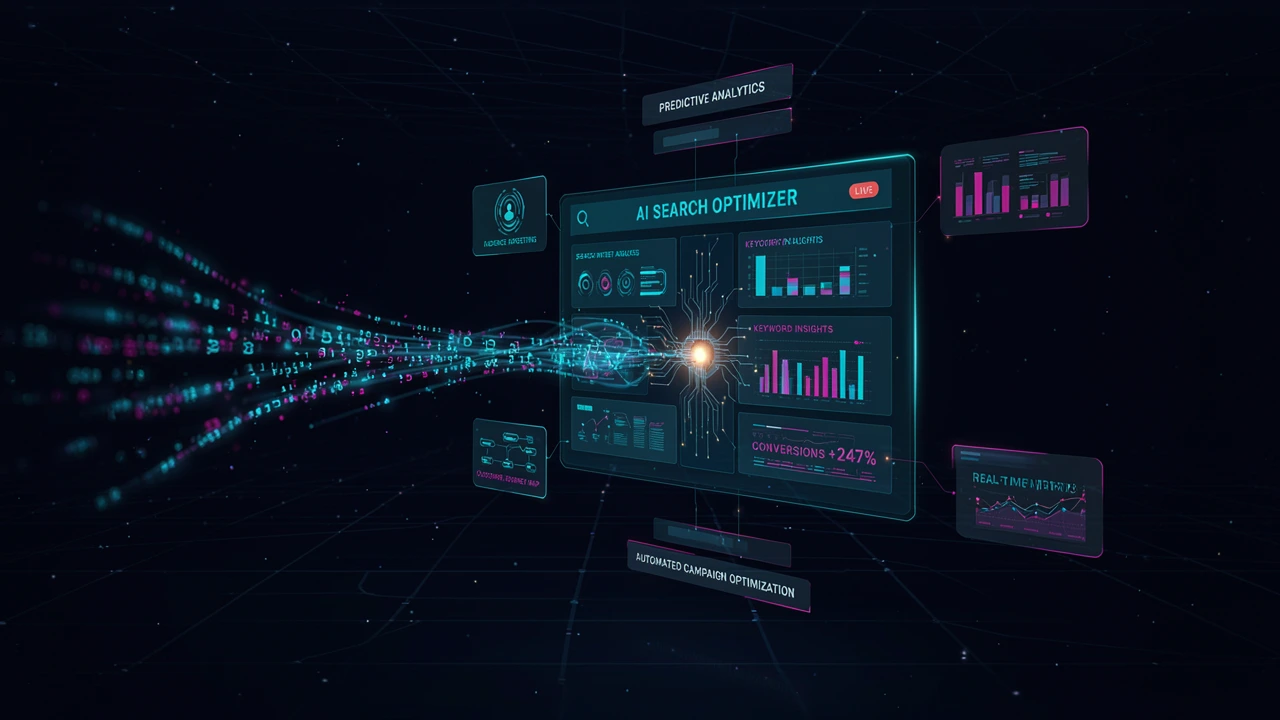
Search engine marketing is entering a new phase as artificial intelligence changes how people discover products, compare services, and make purchasing decisions. Traditional campaigns often rely on carefully selected keywords, manually written advertisements, and fixed landing pages. However, modern customers use conversational queries and express complex needs that can be difficult to predict.
Google Ads AI Max helps marketers adapt to this changing environment by adding artificial intelligence capabilities to existing Search campaigns. Rather than treating every keyword as an isolated opportunity, AI Max uses search intent, website content, and contextual signals to help advertisers reach relevant audiences. Consequently, businesses can explore new search opportunities while improving how their advertising responds to customer needs.
Understanding the Technology Behind AI Max
AI Max is not a separate campaign type. It is a collection of AI powered optimization features that can be enabled within existing Google Ads Search campaigns. These features support search term matching, text customization, and final URL expansion, helping advertisers discover relevant queries, adapt advertising messages, and direct visitors to suitable website pages.
Moreover, AI Max provides controls that help marketers guide automation according to business goals. Advertisers can manage brand settings, define URL exclusions, and apply messaging guidelines where available. This balance between automation and control is important because successful digital marketing innovations should support business strategy rather than replace it entirely.
Reaching Customers Beyond Traditional Keywords
Keyword research remains valuable, but customer intent is becoming more complex. Someone searching for an affordable project management platform for a remote team may use different wording from someone searching for software with collaboration features. Both users may have similar needs, even when their queries do not match the same exact keywords.
AI Max can help identify relevant searches beyond conventional keyword targeting. As a result, marketers have opportunities to reach potential customers earlier in the decision making process. However, broader reach does not automatically guarantee better results. Campaign teams should review search term reports, monitor irrelevant traffic, and use available controls to maintain alignment with their target audiences.
Creating More Relevant Advertising Experiences
Customers are more likely to engage with advertisements that reflect their needs and provide a clear next step. AI Max can use existing advertising assets and website content to generate customized ad text for relevant searches. Final URL expansion can also direct visitors to a suitable page on the advertiser’s website when the feature is enabled.
These capabilities make customer experience strategies an essential part of search campaign planning. For example, a visitor researching a particular service should ideally arrive at a page that explains that service instead of a generic homepage. Similarly, an advertisement should communicate a clear and accurate benefit that matches the destination page.
Therefore, marketers need to maintain useful website content, consistent messaging, and transparent offers. Automation can improve relevance, but the quality of the underlying content still influences the experience customers receive.
AI powered advertising creates new opportunities for data driven marketing, but businesses still need reliable measurement to understand its impact. Marketers should assess conversions, conversion value, cost per acquisition, and return on advertising spend according to their objectives. They should also examine how search terms, creative assets, and landing pages contribute to campaign outcomes.
Google announced a unified AI Max reporting feature in September 2026 that connects search terms, advertising creative, and landing pages in one view. This development can help advertisers understand the customer journey more clearly and investigate which combinations contribute to results.
Additionally, teams should compare performance against a meaningful baseline before making major budget decisions. Controlled experiments, consistent conversion tracking, and accurate analytics can help separate genuine improvements from normal fluctuations. These technology insights support stronger marketing trends analysis and more informed investment decisions.
Balancing Automation With Brand Control
Although automation can save time, marketers should not assume that every AI generated message will reflect their brand accurately. Advertising copy must remain truthful, consistent, and appropriate for the audience. Businesses should review claims, product descriptions, pricing references, and regulated messaging before allowing automated assets to reach customers.
Meanwhile, brand engagement strategies should extend beyond the advertisement itself. The website, form, checkout process, and follow up communication should deliver the experience promised in the campaign. When these elements work together, businesses can create a more consistent path from discovery to conversion.
In contrast, disconnected messaging or irrelevant landing pages can weaken customer trust, even when a campaign generates additional clicks. Human oversight therefore remains essential for protecting brand identity and maintaining quality.
Preparing Search Campaigns for the Next Stage of AI
As search behavior evolves, marketers should treat AI Max as part of a broader optimization strategy rather than a quick fix. Start by reviewing campaign objectives, conversion tracking, website content, and existing search performance. Then test relevant AI features carefully and compare the results with established benchmarks.
Teams should also document changes, monitor search quality, and evaluate whether additional conversions deliver genuine business value. This approach helps organizations adopt new digital marketing innovations without losing sight of profitability or customer needs.
Looking ahead, successful search marketing will depend on combining intelligent automation with strong data foundations, relevant content, and thoughtful customer experience strategies. AI Max offers marketers another way to adapt to changing search behavior, while careful measurement and human judgment help ensure that automation serves meaningful business outcomes.
Turning AI Search Insights Into Action
Businesses that combine AI powered campaign tools with relevant content and reliable measurement can build more adaptable search strategies. Continue testing, learning from customer behavior, and refining campaigns as the technology evolves.
Explore MarTechInfoPro.com for practical Technology insights and expert Marketing trends analysis.
Discover more strategies for smarter advertising, better customer experiences, and sustainable digital growth.
Source : ads.microsoft.com