Customers interact with brands through websites, social media, email, mobile applications, and customer support channels. However, these interactions do not always create a smooth or consistent experience. When businesses fail to understand how customers move between these touchpoints, they risk losing engagement and potential sales. This is where customer journey mapping becomes valuable.
Customer journey mapping helps businesses understand the complete customer experience, from initial awareness to purchase and long term loyalty. By identifying customer needs, expectations, and challenges at every stage, marketing teams can develop more relevant communications and improve relationships. In today’s evolving MarTech ecosystem, this approach also supports data driven decisions and more effective digital strategies.
What Is Customer Journey Mapping?
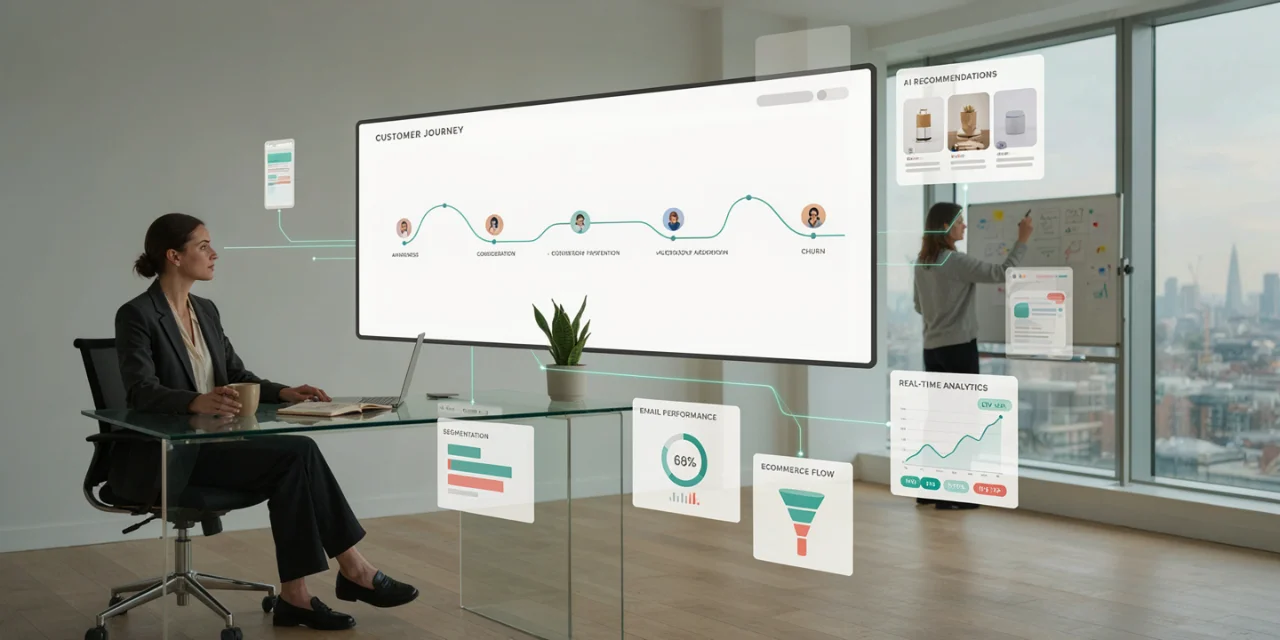
Customer journey mapping is the process of visually representing the steps customers take when interacting with a business. It considers what customers do, what they expect, and where they may experience difficulties throughout their journey.
For example, a potential customer might discover a product through a social media advertisement, visit the company website, compare available options, and eventually complete a purchase. If the website provides confusing information or the checkout process is complicated, the customer may leave without buying.
By mapping these interactions, businesses can identify friction points and understand how individual experiences influence overall satisfaction. Consequently, customer journey mapping provides a clearer foundation for improving marketing, sales, and customer service.
Identifying Customer Needs and Pain Points
One of the biggest advantages of customer journey mapping is its ability to reveal problems that may otherwise go unnoticed. A business might generate significant website traffic but struggle to convert visitors into customers. Similarly, customers may engage with email campaigns but stop responding when messages become repetitive or irrelevant.
Journey maps help marketers investigate these issues by examining customer behaviour at each stage. Website analytics, customer surveys, support conversations, and sales feedback can reveal where people encounter obstacles.
Moreover, understanding customer concerns allows businesses to prioritise improvements that make a meaningful difference. Simplifying a registration form, clarifying product information, or improving response times can reduce frustration and encourage customers to continue interacting with a brand.
Personalisation Creates More Relevant Experiences
Modern customers expect brands to understand their interests without making interactions feel intrusive. Customer journey mapping helps marketing teams identify when personalised communication can be most useful.
For instance, a retailer can provide relevant product recommendations based on customer preferences, while a software company can share educational content with prospects exploring different solutions. These Customer experience strategies make communication more relevant because they reflect the customer’s current needs.
Additionally, marketing automation platforms can use journey stages to trigger appropriate emails, reminders, and follow up messages. However, personalisation works best when businesses respect customer consent and avoid excessive communication. The goal is to provide useful information rather than overwhelm customers with promotional messages.
Using Data to Improve Customer Journey Mapping
Effective customer journey mapping depends on accurate and meaningful data. Businesses can combine information from customer relationship management systems, website analytics, email platforms, and customer feedback tools to understand how people interact with their brands.
This approach strengthens Data driven marketing by helping teams recognise patterns, compare channel performance, and identify opportunities for improvement. For example, analytics may reveal that customers who read product comparison pages are more likely to request a demonstration. Marketers can use this insight to make those pages easier to find and improve follow up communication.
Meanwhile, integrating marketing technology platforms can create a more connected view of customer interactions. Nevertheless, organisations should maintain reliable data, protect personal information, and ensure that their analysis reflects real customer behaviour.
Connecting Multiple Channels for a Consistent Experience
Customers rarely follow a perfectly predictable path. They may discover a brand on social media, research products through a search engine, ask questions through live chat, and complete a purchase on another device.
Customer journey mapping helps businesses understand these connections and reduce inconsistencies between channels. For example, a customer who has already provided information should not need to repeat the same details when contacting another department.
Consequently, connected systems and shared customer information can make interactions more convenient. Digital marketing innovations, including integrated CRM platforms and intelligent automation, can help businesses maintain consistent messaging across channels.
Similarly, effective Brand engagement strategies ensure that customers receive a coherent experience regardless of how they interact with the business.
How Customer Journey Mapping Supports Business Growth
Improving the customer experience can influence conversion rates, customer retention, and long term loyalty. When businesses remove unnecessary obstacles and provide relevant support, customers may find it easier to make decisions and continue their relationship with the brand.
Journey mapping also encourages collaboration between marketing, sales, and customer service teams. Instead of focusing exclusively on individual campaign metrics, teams can examine how their activities contribute to the complete customer experience.
Furthermore, regular Marketing trends analysis helps organisations recognise changing expectations and emerging opportunities. These Technology insights allow businesses to adapt their strategies as customer behaviour, digital channels, and marketing tools evolve.
However, journey mapping should not be treated as a one time exercise. Customer preferences change, and businesses need to review their maps regularly using fresh data and feedback.
Practical Insights and the Future of Customer Experience
As artificial intelligence and marketing automation become more sophisticated, customer journey mapping is likely to become more dynamic. AI powered analytics can help identify behavioural patterns, predict potential customer needs, and suggest relevant actions at different stages of the journey.
However, technology alone cannot create meaningful customer relationships. Businesses must combine analytical insights with empathy, clear communication, and a genuine understanding of customer expectations.
A practical starting point is to map one important journey, such as signing up for a service or completing an online purchase. Identify the main touchpoints, collect feedback, and measure where customers experience difficulties. Then test targeted improvements and evaluate their results.
Ultimately, customer journey mapping gives businesses a structured way to understand customer behaviour and improve every interaction. Organisations that continually refine their approach can create more consistent experiences, strengthen customer loyalty, and respond more effectively to changing expectations.
Explore more expert marketing technology insights, customer experience strategies, and digital innovation updates on MarTechInfoPro.com.