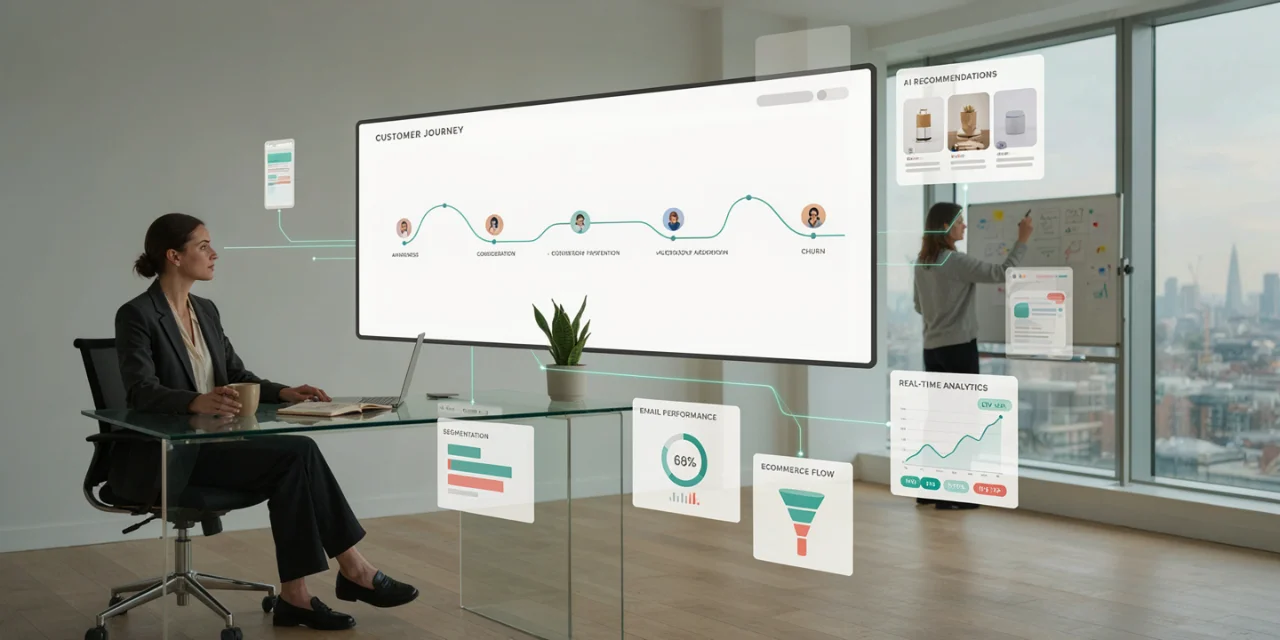
Customer experience refers to the overall perception a customer develops through every interaction with a business. From visiting a website and communicating with customer support to purchasing a product and receiving after-sales service, every interaction contributes to the customer experience.
A positive customer experience can encourage customers to return, recommend a brand to others, and build long-term loyalty. A poor experience, on the other hand, can cause customers to switch to competitors.
What Is Customer Experience?
Customer experience is the overall impression a customer has of a company based on their interactions with its brand, products, services, employees, website, applications, and support channels.
It covers the entire customer journey rather than focusing on a single interaction.
For example, imagine a customer discovers a company through social media. They visit the website, compare products, place an order, receive the product on time, and contact support with a question. Every one of these touchpoints contributes to their overall customer experience.
Therefore, customer experience is not limited to customer service. It includes everything that influences how customers perceive and feel about a business.
Why Is Customer Experience Important?
Customer experience has become an important part of business strategy because customers have many choices available to them. When several companies offer similar products or services, the experience can become a major factor influencing purchasing decisions.
A strong customer experience can help businesses build trust and create meaningful relationships with customers. Customers who consistently receive positive experiences are more likely to purchase again and recommend the business.
Customer experience can also influence a company’s reputation. Customers frequently share their experiences through reviews, social media, and word of mouth. Positive experiences can strengthen a brand’s reputation, while repeated negative experiences can damage it.
Key Elements of Customer Experience
Customer experience consists of several important elements that work together throughout the customer journey.
Customer Service
Customer service plays a significant role in customer experience. Customers expect businesses to respond quickly, provide accurate information, and resolve problems effectively.
Helpful and knowledgeable support teams can turn a difficult situation into a positive interaction.
Product or Service Quality
The quality of a product or service directly affects customer perception. Even excellent customer support may not compensate for a product that consistently fails to meet expectations.
Businesses should focus on delivering products and services that provide the value customers expect.
Ease of Use
Customers generally prefer simple and convenient experiences. Websites, mobile applications, payment processes, account registration, and product returns should be easy to understand and use.
Reducing unnecessary steps can make the customer journey smoother.
Personalization
Customers increasingly expect businesses to provide relevant experiences. Personalization can include product recommendations, targeted content, personalized communication, and offers based on customer interests.
When done responsibly, personalization can make customers feel understood and valued.
Consistency
Customers may interact with a company through multiple channels, including websites, social media, email, mobile applications, and physical stores.
A consistent experience across these channels can create a stronger and more reliable brand impression.
Emotional Connection
Customer experience is not only about convenience and efficiency. Emotions also influence how customers remember a brand.
Businesses that demonstrate empathy, appreciation, and genuine concern can develop stronger relationships with their customers.
Customer Experience vs Customer Service
Customer experience and customer service are closely related, but they are not the same thing.
Customer service generally focuses on helping customers when they have questions, problems, or requests. It is one part of the overall customer journey.
Customer experience is broader. It includes every interaction and impression a customer has with a business before, during, and after a purchase.
For example, a customer may have excellent customer service but still have a poor customer experience because the website is difficult to use, delivery is unreliable, or the product does not meet expectations.
Customer Experience vs User Experience
Customer experience is also different from user experience, although the two concepts overlap.
User experience typically focuses on how easily and effectively a person interacts with a particular product, website, or application.
Customer experience covers the broader relationship between a customer and a company.
For example, the user experience of an online shopping application may involve navigation, search, product pages, and checkout. Customer experience can include those elements as well as advertising, delivery, customer support, returns, loyalty programs, and post-purchase communication.
What Is the Customer Experience Journey?
The customer experience journey describes the different stages customers go through when interacting with a business.
Awareness
The journey often begins when customers become aware of a brand through advertising, search engines, social media, recommendations, or other channels.
Consideration
Customers research products or services, compare alternatives, read reviews, and evaluate whether a company can meet their needs.
Purchase
At this stage, customers decide to buy. A simple checkout process, transparent pricing, flexible payment options, and clear information can improve the experience.
Post-Purchase
The experience continues after the purchase. Delivery, onboarding, product support, returns, and follow-up communication can influence customer satisfaction.
Loyalty
A consistently positive experience can encourage customers to continue purchasing from a business. Loyalty programs, personalized communication, and excellent support can further strengthen the relationship.
Benefits of a Positive Customer Experience
Investing in customer experience can provide several benefits for businesses.
Increased Customer Loyalty
Customers who have positive interactions with a company are more likely to return. Consistent experiences can help businesses develop long-term relationships instead of relying only on one-time purchases.
Higher Customer Retention
Keeping existing customers can be valuable because satisfied customers are more likely to remain with a brand when they receive consistent value and support.
Stronger Brand Reputation
Customers often share their experiences online. Positive reviews and recommendations can help businesses establish credibility and attract new customers.
Increased Revenue
Better customer experiences can influence purchasing behavior, repeat purchases, and customer loyalty. Over time, these factors can contribute to business growth.
Competitive Advantage
When competitors offer similar products or pricing, customer experience can help a company differentiate itself.
How to Improve Customer Experience
Businesses can take several steps to improve the customer experience.
Understand Your Customers
Businesses should understand customer needs, expectations, preferences, and pain points. Surveys, interviews, reviews, support conversations, and customer behavior data can provide useful insights.
Map the Customer Journey
Customer journey mapping helps businesses identify important customer touchpoints and discover where customers may experience difficulties.
For example, a business may find that customers frequently abandon purchases because the checkout process contains too many steps.
Collect Customer Feedback
Regular feedback can reveal what customers like and where improvements are needed. Businesses can collect feedback through surveys, reviews, feedback forms, and customer support interactions.
Improve Customer Support
Fast and effective support can have a major impact on customer experience. Businesses should make it easy for customers to find help and provide consistent support across relevant channels.
Make Digital Experiences Simple
Websites and applications should be easy to navigate. Clear menus, readable content, fast-loading pages, accessible design, and simple checkout processes can reduce customer frustration.
Use Data Responsibly
Customer data can help businesses understand behavior and provide more relevant experiences. However, companies should handle customer information responsibly and maintain transparency about how data is collected and used.
Train Employees
Employees directly influence customer interactions. Training teams in communication, problem-solving, product knowledge, and empathy can help create better experiences.
How to Measure Customer Experience
Businesses need measurable indicators to understand whether their customer experience efforts are working.
Net Promoter Score, or NPS, measures how likely customers are to recommend a company or product to others.
Customer Satisfaction Score
Customer Satisfaction Score, commonly called CSAT, measures how satisfied customers are with a particular interaction, product, or service.
Customer Effort Score
Customer Effort Score measures how easy or difficult customers find it to complete a specific task, such as resolving an issue or making a purchase.
Customer Retention Rate
Customer retention measures how effectively a company keeps customers over a specific period.
Customer Reviews
Reviews can provide qualitative information about customer experiences. Businesses can analyze recurring themes in reviews to identify areas that require improvement.
Role of Technology in Customer Experience
Technology has changed how businesses interact with customers. Customer relationship management systems, analytics platforms, artificial intelligence, chatbots, automation, and personalization tools can help businesses deliver more efficient experiences.
For example, automated support can provide customers with immediate answers to common questions, while analytics can help businesses identify patterns in customer behavior.
However, technology should support the customer rather than make interactions unnecessarily complicated. Human assistance remains important, particularly when customers have complex or sensitive problems.
Examples of Good Customer Experience
A good customer experience can take many forms.
An online retailer might provide accurate product information, a simple checkout process, real-time delivery updates, and an easy return process.
A software company might provide a simple onboarding process, helpful documentation, responsive support, and regular product improvements based on customer feedback.
A hotel might provide easy booking, personalized communication, a smooth check-in process, comfortable services, and quick assistance when guests need help.
In each example, the experience extends beyond the actual product or service.
Common Customer Experience Mistakes
Businesses can unintentionally create poor customer experiences by making processes complicated, ignoring feedback, providing inconsistent information, or making customers repeat the same problem to different support representatives.
Another common mistake is focusing only on individual transactions instead of considering the complete customer journey.
Businesses should look at the experience from the customer’s perspective and identify unnecessary friction at every important touchpoint.
Future of Customer Experience
Customer expectations will continue to evolve as technology develops. Businesses are likely to focus increasingly on personalization, automation, omnichannel interactions, self-service, and real-time customer support.
At the same time, customers will continue to value transparency, privacy, authenticity, and human interaction.
The businesses that succeed will be those that combine technology with a strong understanding of customer needs.
Conclusion
Customer experience is the complete perception customers develop through their interactions with a business. It includes customer service, product quality, website usability, personalization, communication, delivery, support, and many other touchpoints.
A successful customer experience strategy starts with understanding customers and identifying the challenges they face throughout their journey. Businesses can then use feedback, data, technology, and employee training to create simpler, more consistent, and more valuable interactions.
In a competitive market, delivering a great customer experience is not simply about satisfying customers. It is about building trust, encouraging loyalty, and creating relationships that can support long-term business growth.
Explore MarTechInfoPro.com for expert Marketing technology insights, emerging AI trends, and practical strategies that drive measurable business growth.