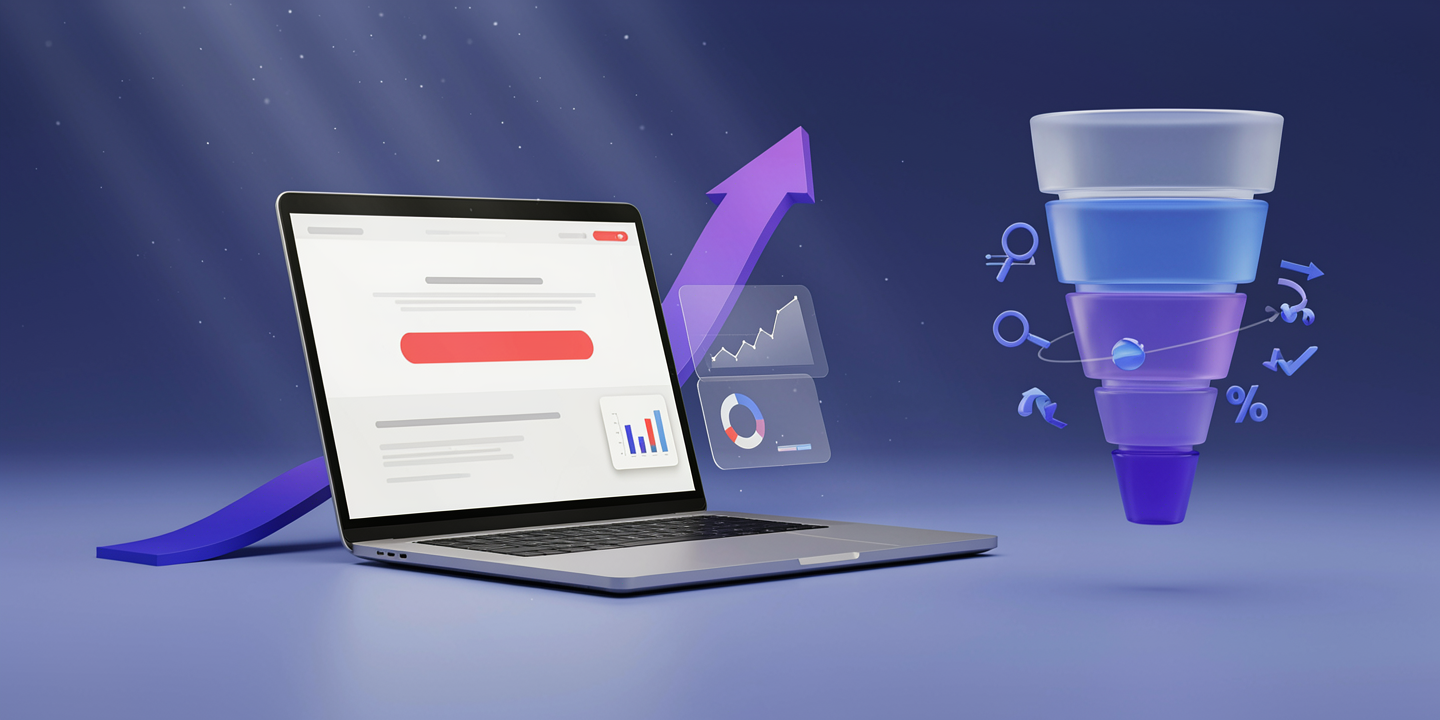
In today’s digital world, attracting visitors to a website is only the first step toward business growth. The bigger challenge is encouraging those visitors to take meaningful actions such as making a purchase, submitting a form, signing up for a service, or requesting more information. This is where Conversion Rate Optimization becomes important.
Conversion Rate Optimization, commonly known as CRO, is a systematic approach to improving a website or landing page so that a higher percentage of visitors complete a desired action. Instead of focusing only on getting more traffic, businesses use CRO to get better results from the traffic they already have.
What Is Conversion Rate Optimization?
Conversion Rate Optimization is the process of analyzing user behavior and improving different elements of a website to increase the number of visitors who convert.
A conversion can mean different things depending on a business. For an online store, it may be completing a purchase. For a software company, it could be signing up for a free trial. For a service business, it might mean submitting a contact form or scheduling a consultation.
The basic conversion rate formula is:
Conversion Rate = (Number of Conversions ÷ Number of Visitors) × 100
For example, if a website receives 10,000 visitors and 500 visitors complete a desired action, the conversion rate is 5%.
The goal of Conversion Rate Optimization is to improve that percentage by understanding what users need, identifying obstacles, and making the website easier and more persuasive to use.
Why Is Conversion Rate Optimization Important?
Many businesses invest heavily in advertising, search engine optimization, social media, and content marketing to attract website visitors. However, generating traffic does not automatically generate customers.
A website can receive thousands of visitors but still produce relatively few leads or sales if the user experience is confusing or the conversion process is difficult.
Conversion Rate Optimization helps businesses make better use of existing traffic. Rather than continuously spending more money to attract additional visitors, businesses can improve the percentage of current visitors who become customers or leads.
CRO can also help reduce customer acquisition costs, improve user experience, increase revenue, and provide valuable insights into customer behavior.
How Does Conversion Rate Optimization Work?
A successful Conversion Rate Optimization strategy usually begins with research. Businesses need to understand how visitors interact with their websites before making significant changes.
Website analytics can reveal information such as which pages receive the most traffic, where visitors leave, how long users stay on a page, and which devices they use.
Businesses can also use heatmaps, session recordings, customer surveys, usability testing, and user feedback to understand why visitors may not be converting.
After identifying potential problems, marketers can create hypotheses about what changes might improve performance. These changes can then be tested and measured.
This makes CRO an ongoing process rather than a one-time website improvement project.
Key Elements of Conversion Rate Optimization
Several website elements can influence whether a visitor completes a conversion.
Landing Pages
Landing pages are often designed around a specific marketing goal. A strong landing page should communicate its value quickly and make the next step clear.
An effective landing page typically has a relevant headline, persuasive content, strong visuals, trust signals, and a clear call to action.
Call to Action
A call to action tells visitors what they should do next. Examples include “Buy Now,” “Get Started,” “Request a Demo,” and “Download the Guide.”
The wording, placement, visibility, and design of a CTA can influence conversion performance.
Website Navigation
Visitors should be able to find important information without unnecessary effort. Complicated navigation can create friction and cause users to leave before completing their desired action.
Simple and logical navigation can make the overall user experience easier.
Forms
Forms are commonly used for lead generation, registrations, contact requests, and other conversions. Long or complicated forms can discourage visitors.
Businesses can improve form performance by requesting only essential information, using clear labels, and providing useful error messages.
Page Speed
Website speed can significantly affect the user experience. Slow pages may cause visitors to leave before they see the content or conversion opportunity.
Optimizing images, reducing unnecessary scripts, improving hosting performance, and using efficient website code can help create a faster experience.
Trust Signals
Visitors may hesitate to convert if they do not trust a business or website. Customer reviews, testimonials, security information, guarantees, certifications, case studies, and recognizable client logos can help build confidence.
Common Conversion Rate Optimization Strategies
There are several strategies businesses can use to improve conversion performance.
A/B Testing
A/B testing compares two versions of a webpage or element to determine which performs better. For example, a business might compare two headlines, CTA buttons, page layouts, or images.
Instead of relying on assumptions, businesses can use actual user behavior to determine which variation generates better results.
Improving Headlines
The headline is often one of the first elements visitors see. A clear headline should communicate what the page offers and why it matters to the visitor.
Weak or vague headlines can make it difficult for users to understand the value of a product or service.
Strengthening Value Propositions
A value proposition explains why customers should choose a particular product, service, or company.
A strong value proposition focuses on customer needs and clearly communicates the benefits of the offering.
Reducing Friction
Friction refers to anything that makes the conversion process unnecessarily difficult.
Examples include complicated checkout processes, excessive form fields, unclear pricing, confusing navigation, slow-loading pages, and unclear instructions.
Reducing these obstacles can make it easier for visitors to complete their intended actions.
Creating Mobile-Friendly Experiences
A significant amount of web traffic comes from smartphones and tablets. Websites that are difficult to use on smaller screens can lose potential customers.
Responsive layouts, readable text, mobile-friendly buttons, fast loading times, and simple forms are important parts of mobile-focused CRO.
Benefits of Conversion Rate Optimization
Conversion Rate Optimization can provide several benefits to businesses.
One major benefit is increased revenue. If a business can increase its conversion rate without significantly increasing traffic, it may generate more sales from the same audience.
CRO can also improve marketing efficiency. Paid advertising, SEO, email marketing, and social media campaigns become more valuable when a larger percentage of visitors take action.
Another benefit is improved user experience. Many CRO improvements focus on making websites faster, clearer, simpler, and easier to navigate.
CRO also encourages data-driven decision-making. Instead of making website changes based entirely on personal opinions, businesses can use analytics and testing to understand what works.
Conversion Rate Optimization vs SEO
SEO and Conversion Rate Optimization have different primary goals, but they work well together.
Search engine optimization focuses on increasing a website’s visibility and attracting relevant organic traffic from search engines.
CRO focuses on turning website visitors into leads, customers, subscribers, or other types of conversions.
For example, SEO may bring 10,000 additional visitors to a website. CRO can help ensure that more of those visitors take meaningful actions.
The strongest digital marketing strategies often combine both approaches.
Common CRO Mistakes to Avoid
One common mistake is making changes without collecting enough data. A single personal opinion about a website does not necessarily represent the behavior of its entire audience.
Another mistake is testing too many changes at the same time. If multiple elements are changed simultaneously, it can become difficult to determine which change caused the improvement or decline.
Businesses should also avoid focusing only on increasing clicks. A higher click-through rate does not always mean better business results. The final conversion or business objective should remain the focus.
Ignoring mobile users is another common problem. A page that performs well on a desktop may provide a poor experience on smartphones.
How to Measure Conversion Rate Optimization Success
Measuring CRO requires more than looking at the overall conversion rate. Businesses can track different metrics depending on their goals.
Important metrics can include conversion rate, lead generation rate, sales, revenue per visitor, average order value, form completion rate, checkout abandonment, and customer acquisition cost.
The right metrics depend on the specific conversion goal of the website.
Businesses should establish a baseline before making changes. This makes it easier to compare performance before and after optimization.
Best Practices for Conversion Rate Optimization
Successful Conversion Rate Optimization requires continuous research, testing, and improvement.
Businesses should understand their target audience, identify important conversion problems, create clear hypotheses, test changes systematically, and evaluate results using reliable data.
It is also important to prioritize changes based on potential impact. Fixing major usability problems can often be more valuable than making small cosmetic changes.
CRO should also be treated as an ongoing process. Customer expectations, competitors, devices, and digital trends continue to change, so websites need regular evaluation.
Conclusion
Conversion Rate Optimization is an important digital marketing practice that helps businesses turn more website visitors into customers, leads, subscribers, or other valuable conversions.
Rather than focusing exclusively on increasing traffic, CRO focuses on improving what happens after visitors arrive. Through research, analytics, A/B testing, better landing pages, stronger CTAs, faster websites, and improved user experiences, businesses can create websites that perform more effectively.
For beginners, the best approach is to start with a clear conversion goal, understand visitor behavior, identify potential barriers, and make improvements based on data. Over time, a consistent Conversion Rate Optimization strategy can contribute to better user experiences, stronger marketing performance, and sustainable business growth.
Explore MarTechInfoPro.com for expert Marketing technology insights, emerging AI trends, and practical strategies that drive measurable business growth.