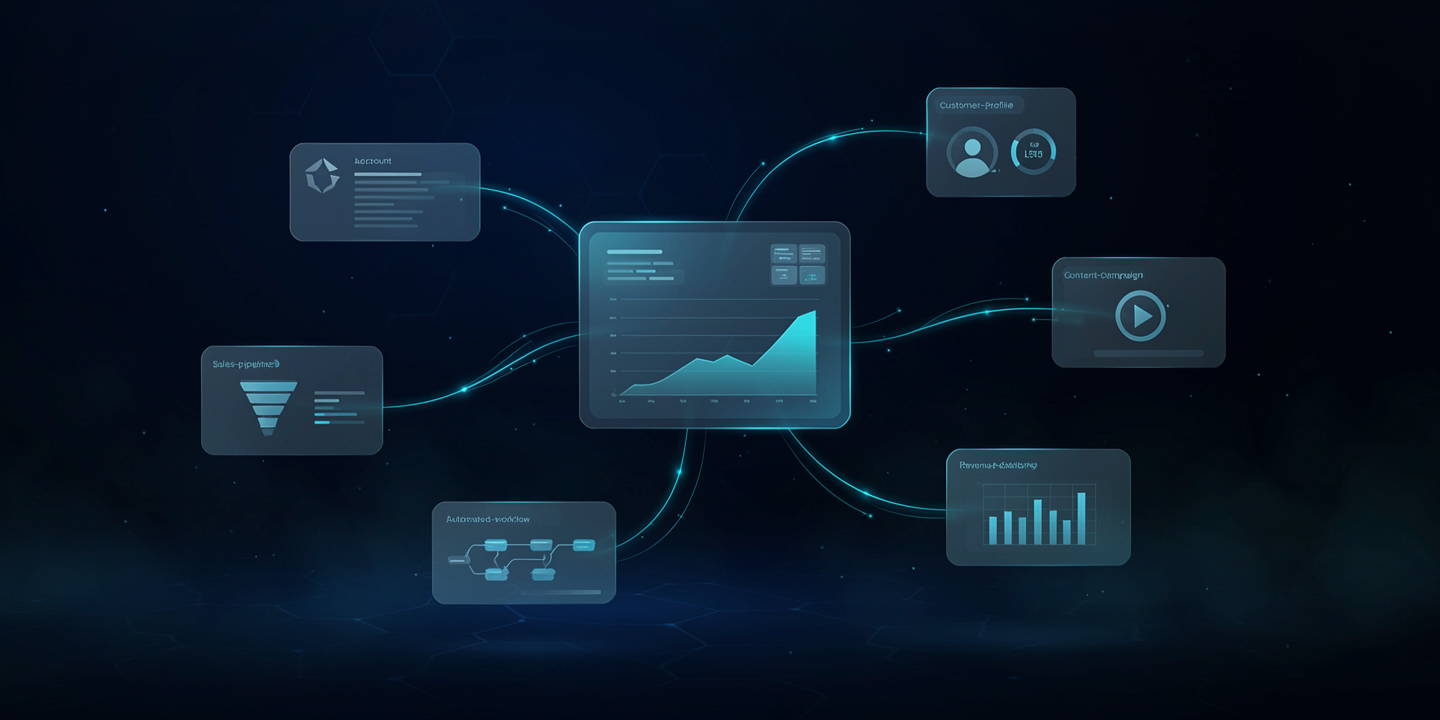
B2B SaaS Demand Generation is evolving rapidly as artificial intelligence changes how software companies attract prospects, engage decision-makers, and build predictable sales pipelines. Traditional marketing strategies still have an important role, but AI is enabling SaaS companies to analyze customer behavior, personalize campaigns, automate repetitive tasks, and identify high-value opportunities more efficiently.
In 2026, successful B2B SaaS companies are increasingly combining data, automation, content, and AI to create demand throughout the entire buyer journey.
What Is B2B SaaS Demand Generation?
B2B SaaS Demand Generation refers to the marketing strategies and activities used by software companies to create awareness, generate interest, and develop potential business opportunities.
Unlike lead generation, which often focuses specifically on collecting contact information, demand generation takes a broader approach. It aims to make potential customers aware of a problem, educate them about possible solutions, build trust, and eventually encourage them to consider a company’s product.
For SaaS businesses, this process can involve content marketing, search engine optimization, webinars, social media, email campaigns, paid advertising, product demonstrations, and account-based marketing.
AI Is Making Demand Generation More Data Driven
One of the biggest changes in B2B SaaS Demand Generation is the growing use of AI for analyzing large amounts of marketing and customer data.
AI systems can identify patterns across website activity, content engagement, email interactions, campaign performance, and customer behavior. Marketing teams can use these insights to understand which audiences are most likely to engage with particular content or move further through the buying journey.
Instead of relying entirely on assumptions, marketers can use data-driven insights to refine their targeting and allocate resources toward higher-potential opportunities.
Personalization at Scale
B2B buyers increasingly expect relevant experiences. However, creating highly personalized campaigns manually can require significant time and resources.
AI can help SaaS marketers personalize content and messaging based on factors such as industry, company size, buyer role, previous interactions, and interests.
A visitor researching cybersecurity software, for example, may receive different content from someone evaluating customer relationship management platforms. AI-powered systems can help identify these differences and deliver more relevant experiences without requiring marketers to manually create every variation.
AI-Powered Content Creation
Content remains an important part of B2B SaaS Demand Generation because business buyers often conduct extensive research before speaking with sales teams.
AI can assist marketing teams with content research, topic discovery, content personalization, summaries, campaign variations, and optimization. This allows marketers to accelerate parts of the content production process while maintaining strategic oversight.
However, producing large amounts of generic AI-generated content is unlikely to create sustainable competitive advantages. SaaS companies still need original insights, credible expertise, useful research, and a clear understanding of their customers.
The strongest approach combines AI efficiency with human expertise and editorial judgment.
Predictive Lead and Account Scoring
AI can also improve how SaaS companies prioritize potential customers.
Traditional scoring models may rely on predefined rules such as website visits, email opens, or form submissions. AI-powered systems can analyze larger combinations of behavioral and business signals to identify accounts that may have a higher likelihood of becoming customers.
This can help marketing and sales teams focus their attention on prospects showing stronger buying signals rather than treating every lead equally.
AI and Account-Based Marketing
Account-based marketing has become increasingly important for B2B SaaS companies selling higher-value products to specific businesses.
AI can support account-based strategies by helping marketers identify target organizations, research buying signals, segment accounts, personalize messaging, and determine which channels are producing engagement.
This can make ABM programs more scalable while allowing teams to maintain a focused approach toward high-value accounts.
Automating the Buyer Journey
AI-powered automation is helping connect different stages of the B2B buying journey.
A prospect might first discover a SaaS company through search, interact with educational content, receive personalized follow-up communication, attend a webinar, and eventually request a product demonstration.
Automation platforms can help coordinate these interactions based on customer behavior. Instead of sending identical messages to every prospect, businesses can create dynamic journeys that respond to engagement signals.
This can improve the consistency of communication while reducing repetitive work for marketing teams.
Measuring Pipeline Impact
Modern B2B SaaS Demand Generation requires more than measuring website traffic or the number of leads generated.
Marketing teams increasingly need to understand how campaigns contribute to qualified pipeline and revenue. AI-powered analytics can help connect marketing interactions with broader customer journeys and identify which channels, campaigns, and content are associated with stronger business outcomes.
This allows marketing teams to move closer to revenue-focused measurement and improve budget allocation.
The Human Element Still Matters
Although AI can automate many aspects of demand generation, human expertise remains essential.
B2B purchasing decisions often involve multiple stakeholders, complex business requirements, and significant financial commitments. Buyers need trustworthy information and meaningful conversations rather than automated messages alone.
Marketing teams therefore need to use AI as an amplifier rather than a replacement for strategy. Human creativity, industry knowledge, customer understanding, and relationship building remain critical to successful B2B marketing.
The Future of B2B SaaS Demand Generation
The future of B2B SaaS Demand Generation will likely involve increasingly intelligent marketing systems that can understand customer intent, automate campaign execution, personalize interactions, and provide predictive insights.
As AI becomes more integrated into marketing technology, the distinction between data analysis, campaign management, content personalization, and sales intelligence may become less pronounced.
SaaS companies that combine AI capabilities with strong positioning, valuable content, accurate data, and customer-focused strategies can build more efficient and predictable growth engines.
Conclusion
B2B SaaS Demand Generation is entering a more intelligent and data-driven era. AI is changing how SaaS companies identify opportunities, personalize marketing experiences, create content, prioritize accounts, automate buyer journeys, and measure pipeline performance.
The goal, however, is not simply to automate marketing. The real opportunity is to use AI to understand buyers better and create more relevant experiences throughout the customer journey.
In 2026, SaaS companies that successfully combine artificial intelligence with human creativity and strategic thinking can build stronger demand-generation programs and create a more sustainable path to pipeline growth.
Stay connected with MarTechInfoPro.com to discover trusted insights that help you build smarter marketing strategies and stronger customer experiences.