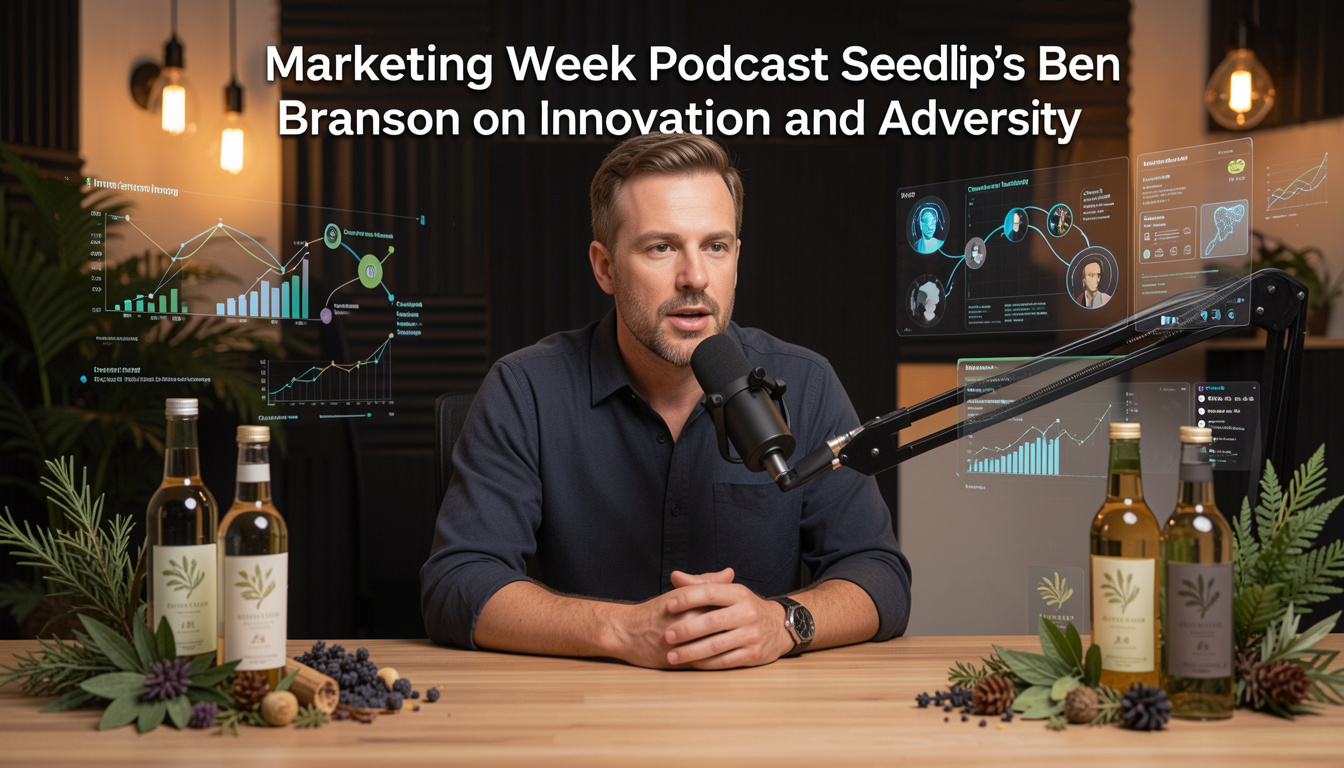
Innovation rarely follows a perfectly planned path. Sometimes, it begins with a personal frustration, an emerging consumer need, or a market opportunity that established businesses have overlooked. The story of Seedlip founder Ben Branson offers an interesting perspective on how unconventional ideas can develop into influential brands.
The Marketing Week Podcast featuring Ben Branson on innovation and adversity provides valuable lessons for marketers navigating an increasingly competitive environment. His experience highlights how persistence, creativity, and a willingness to challenge established assumptions can influence brand development.
For professionals exploring technology insights and modern marketing, the discussion also demonstrates why innovation is often closely connected to understanding changing consumer expectations.
The Story Behind Seedlip’s Market Opportunity
Seedlip emerged from the idea that people looking for sophisticated drinks should have alternatives beyond traditional alcoholic beverages. Rather than simply creating another beverage product, the brand helped contribute to a broader shift in how consumers think about drinking occasions.
However, introducing a new category requires more than developing a product. Brands need to educate consumers, establish credibility, and communicate why the new offering deserves attention.
Consequently, Seedlip’s journey provides an example of how marketers can turn an unfamiliar concept into a recognizable proposition by combining product innovation with strong storytelling.
Turning Adversity Into Opportunity
Building a new category inevitably involves uncertainty. Consumers may not immediately understand the product, while retailers and partners may be cautious about supporting something unfamiliar.
Ben Branson’s experience highlights the importance of persistence when market conditions do not immediately respond to an innovative idea. Moreover, adversity can reveal opportunities to refine positioning, improve communication, and understand customer expectations more clearly.
This mindset is increasingly relevant in today’s MarTech environment, where marketers face rapid technological changes and continuously evolving consumer behavior.
The Importance of Customer Experience
A successful brand is shaped by more than advertising. Customer experience plays an important role in determining whether people remember a company, recommend it, and return to it.
Seedlip’s growth illustrates how product presentation, storytelling, retail experiences, digital communication, and consumer education can work together. Therefore, customer experience strategies should be considered across the entire customer journey rather than within individual marketing channels.
Digital platforms now provide marketers with additional opportunities to personalize that journey. Brands can use customer insights to understand preferences, deliver relevant content, and build stronger relationships over time.
Innovation and Digital Marketing
Modern innovation increasingly intersects with technology. Digital marketing innovations allow brands to reach audiences through social platforms, content experiences, creator partnerships, personalized campaigns, and emerging digital channels.
Meanwhile, marketing technology provides tools that help companies measure engagement and understand how consumers move through different stages of the buying journey.
However, technology should support a clear brand proposition rather than distract from it. The most effective marketing combines digital capabilities with a compelling reason for customers to care.
The Role of Data Driven Marketing
Data driven marketing has become a central component of modern brand strategy. Businesses can analyze customer behavior, campaign performance, audience preferences, and conversion patterns to make better decisions.
For emerging brands, this information can help identify which audiences are responding to a proposition and where communication needs improvement. Additionally, data can reveal changing consumer behaviors that may create opportunities for future innovation.
Nevertheless, data should not replace human understanding. Numbers can show what customers are doing, but qualitative research and direct engagement can help explain why they are doing it.
Building Meaningful Brand Engagement
Brand engagement strategies are becoming increasingly important as consumers interact with companies across numerous channels. Social media, websites, email, retail platforms, events, and communities all contribute to how a brand is perceived.
Seedlip’s story demonstrates the value of creating a distinctive identity around a new category. Rather than competing solely on product features, brands can create cultural relevance through storytelling and experiences.
Similarly, modern marketers can use technology to make those experiences more interactive and personalized. The objective is not simply to generate more interactions but to make those interactions meaningful.
Lessons for the Evolving MarTech Ecosystem
The Marketing Week Podcast featuring Ben Branson on innovation and adversity offers lessons that extend beyond the beverage industry. Marketers across sectors can learn from the importance of challenging assumptions, identifying unmet needs, and remaining persistent when introducing something new.
Marketing trends analysis increasingly shows that consumers respond to brands that provide clarity, authenticity, and useful experiences. Consequently, companies need to think beyond individual campaigns and develop long term relationships with their audiences.
Moreover, the evolving MarTech ecosystem provides marketers with powerful tools for experimentation. Artificial intelligence, automation, analytics, personalization, and customer data platforms can help businesses test ideas and adapt faster.
What Marketers Can Take Forward
The biggest insight from Branson’s experience is that innovation requires resilience. A new idea may encounter skepticism before consumers recognize its value, making patience and continuous learning essential.
Technology can accelerate experimentation, but it cannot eliminate uncertainty. Therefore, marketers should combine data with creativity, customer feedback with strategic thinking, and digital tools with a clear understanding of their brand purpose.
The future of marketing will likely reward organizations that can adapt quickly while maintaining a strong connection with customers. Innovation will continue to matter, but the ability to learn from adversity may become equally valuable.
Practical Insights for Future Marketing Leaders
The Marketing Week Podcast and Ben Branson’s story provide a useful reminder that successful innovation is rarely only about having a new idea. It is about developing that idea, communicating its value, responding to resistance, and continuously improving the customer experience.
For today’s marketers, the opportunity lies in combining technology insights with human creativity. Data driven marketing can improve decision making, while digital marketing innovations can expand reach and customer experience strategies can strengthen relationships.
As the MarTech ecosystem continues to evolve, brands that remain curious, adaptable, and customer focused will be better positioned to turn adversity into opportunity and innovation into sustainable growth.
Explore More Marketing Technology Insights
Discover more expert technology insights, marketing trends analysis, and digital marketing innovations at MarTechInfoPro.com.
Stay informed about the ideas and technologies shaping the future of marketing and customer experience.