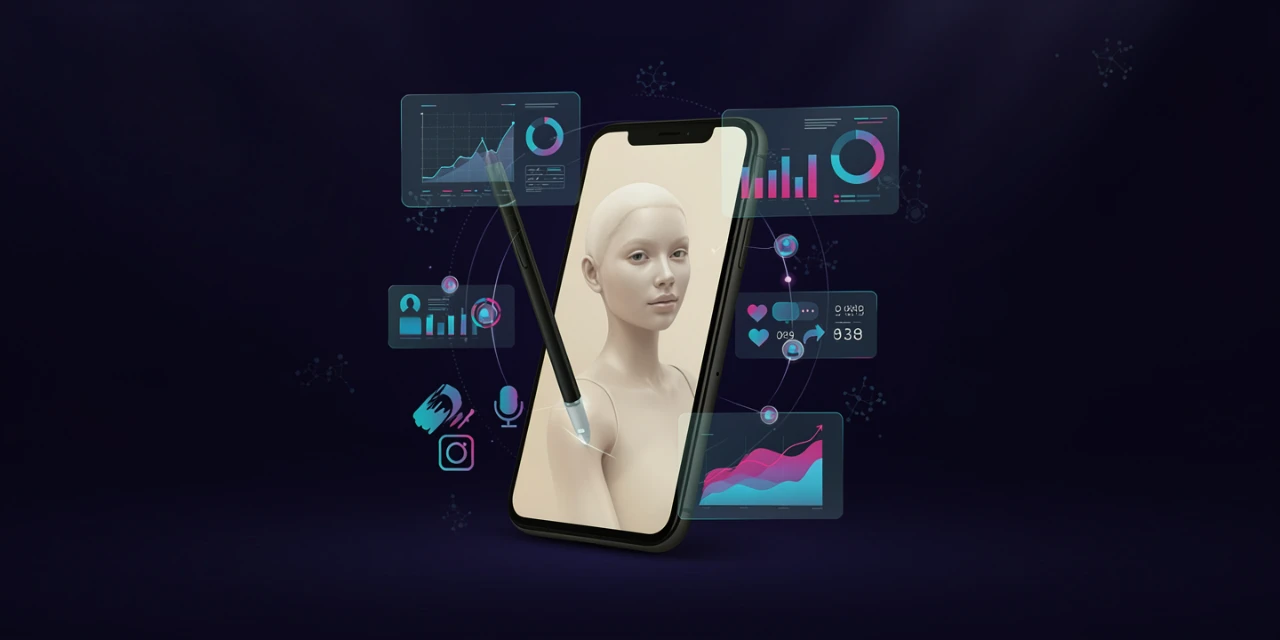
Social media marketing is entering a new phase as brands experiment with AI influencers to create distinctive digital experiences. These computer generated personalities can publish content, develop recognizable identities and interact with audiences across platforms without operating like traditional human creators.
Meanwhile, advances in generative AI, visual production and marketing automation are making virtual creators easier to develop and manage. As a result, marketers can explore new content formats while maintaining greater control over brand messaging. However, the growing interest in AI influencers is not simply about producing more content. It reflects a broader shift toward technology driven brand engagement strategies.
Why Brands Are Exploring Virtual Creators
Traditional influencer marketing can involve complicated schedules, production requirements, contracts and creative coordination. AI influencers offer brands a different operating model because their digital identities can be designed around specific themes, audiences and campaign objectives.
Moreover, virtual creators can support consistent storytelling across multiple campaigns. A fashion brand, for example, could create a digital personality with a defined visual identity and use that character across short videos, product launches and social campaigns.
Recent research from Sprout Social shows that consumer attitudes toward AI creators remain mixed. Its 2026 influencer marketing research found that 44 percent of surveyed consumers across the United States, United Kingdom and Australia expressed discomfort with brands using AI influencers. This highlights why transparency and audience expectations must remain central to the strategy.
Scalability Is Driving Experimentation
One of the strongest attractions of virtual creators is scalability. Human influencer campaigns depend on availability, production schedules and physical locations. Digital characters can be adapted to different creative environments and content formats much faster.
Therefore, marketing teams can test multiple concepts without rebuilding an entire campaign from scratch. AI based production can also support faster experimentation with visuals, scripts and social formats.
This development connects closely with broader digital marketing innovations. Instead of treating social media as a collection of individual posts, marketers are increasingly building connected content systems that combine automation, analytics and creative technology.
Data Driven Marketing Meets Creator Strategy
The evolving MarTech ecosystem is also changing how brands evaluate influencer campaigns. Engagement alone is no longer enough. Marketing teams increasingly want to understand which content generates meaningful interactions, website activity, conversions and customer relationships.
Consequently, AI influencers can become part of a broader data driven marketing workflow. Performance data can help marketers understand which topics, formats and audience segments generate stronger responses.
Additionally, technology platforms are improving creator discovery and commerce measurement. Axios recently reported that AI is being integrated into creator commerce infrastructure to help brands identify promising creators, improve campaign efficiency and connect content with shopping activity.
Customer Experience Remains Critical
Technology can create scale, but customer experience determines whether that scale produces lasting value. Audiences may appreciate creative virtual characters, yet they can also question whether the content feels authentic.
Research published in the Journal of the Academy of Marketing Science indicates that virtual influencer marketing has become an established research area, while newer studies continue examining how audiences respond to virtual personalities and their endorsements.
Therefore, brands need to think beyond visual appeal. Clear disclosure, consistent storytelling and genuine relevance can help customers understand why a digital personality exists and what relationship it has with the brand.
Building Smarter Brand Engagement Strategies
The most useful role for AI influencers may not be replacing human creators. Instead, brands can use them alongside human influencers, employees and customer communities.
In contrast to a purely automated approach, a hybrid strategy can combine technological scalability with human credibility. Human creators can provide personal experiences and cultural context, while virtual creators can support imaginative storytelling and highly controlled brand environments.
Similarly, marketers can use social listening and audience analytics to determine where virtual content fits naturally. This approach allows customer preferences to guide experimentation rather than technology alone determining the campaign direction.
What Marketers Should Watch Next
The future of AI influencers will depend heavily on trust, transparency and measurable performance. Sprout Social reports that consumers increasingly prioritize content relevance and style rather than simply looking at follower counts, suggesting that brands need to evaluate creator relationships using broader engagement signals.
Furthermore, the technology itself is likely to become more sophisticated. Better generative video, synthetic voices, conversational systems and personalization could allow virtual creators to participate in increasingly interactive experiences.
However, this also creates new responsibilities around disclosure, intellectual property, identity and brand safety. Marketers will therefore need governance processes that protect both customers and brand reputation.
Insights and Future Outlook
AI influencers represent one part of a larger transformation taking place across social media and marketing technology. Their value comes from the combination of scalable content production, controlled digital identities, audience analytics and creative experimentation.
The opportunity is not simply to create an artificial personality and publish more posts. Instead, successful programs are likely to connect virtual creators with clear business objectives, customer experience strategies and measurable marketing outcomes.
For marketers following technology insights and marketing trends analysis, this emerging category offers an important lesson. Digital innovation creates the most value when it supports audience needs while remaining transparent about how technology is being used.
Explore more expert insights into marketing technology, AI and digital transformation on MarTechInfoPro.com.