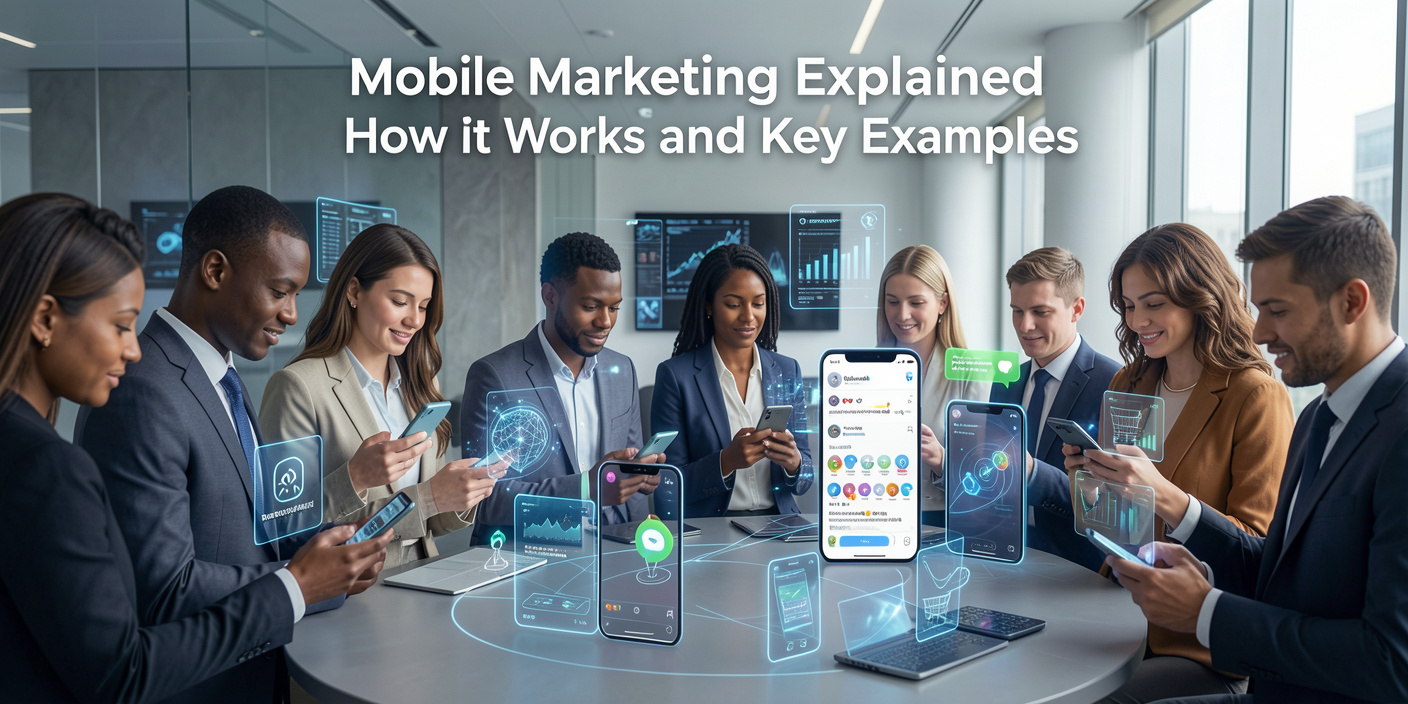
Mobile marketing has become an essential part of modern digital marketing as consumers spend more time using smartphones and tablets. It enables brands to connect with audiences through channels such as mobile websites, applications, text messages, push notifications, social platforms, and location based experiences.
Unlike traditional campaigns, mobile marketing allows businesses to reach customers at highly relevant moments. Therefore, brands can create more personalized interactions while improving engagement and customer experience. As mobile technology continues to evolve, it is also becoming an important component of broader marketing technology strategies.
How Mobile Marketing Works
Mobile marketing works by combining mobile devices, digital channels, customer data, and marketing automation. Businesses first identify their target audience and determine which mobile channels are most relevant to their customers. They can then deliver content, promotions, reminders, recommendations, or experiences designed for mobile users.
Data driven marketing plays an important role in this process. Marketers can analyze customer behavior, preferences, interactions, and campaign performance to improve future communication. Consequently, businesses can move beyond generic messaging and develop experiences that are more relevant to individual users.
Meanwhile, mobile applications provide additional opportunities for personalization. Brands can use app activity and customer preferences to deliver tailored recommendations, loyalty rewards, and timely notifications. However, successful campaigns require careful attention to privacy, frequency, and customer expectations.
Key Mobile Marketing Channels
Mobile marketing can operate across several connected digital channels. SMS campaigns remain useful for time sensitive communication, while push notifications can encourage users to return to an application. Mobile optimized websites help customers browse products, access information, and complete purchases conveniently.
Social media is another major channel because mobile users frequently discover brands through social platforms. Additionally, mobile advertising can use audience data and contextual signals to display relevant promotions across applications and websites.
Location based marketing can further improve relevance by connecting digital messages with physical environments. For example, a retailer may send an offer when a customer is close to a store. As a result, businesses can connect online engagement with offline customer experiences.
Examples of Mobile Marketing in Action
Retail companies often use mobile applications to provide personalized recommendations, loyalty rewards, digital coupons, and order updates. These experiences combine convenience with brand engagement strategies and encourage customers to interact with the business more frequently.
Financial services companies can use mobile notifications to provide transaction alerts, payment reminders, and personalized financial information. Similarly, travel businesses can send booking confirmations, boarding information, destination recommendations, and real time updates through mobile devices.
Restaurants and food delivery platforms also demonstrate the value of mobile marketing. Personalized offers based on previous orders can encourage repeat purchases, while location and behavioral data can help businesses deliver relevant promotions.
These examples demonstrate how digital marketing innovations can transform a mobile device into an ongoing communication channel between a customer and a brand.
Mobile Marketing and Customer Experience
Customer expectations have changed significantly as smartphones have become central to everyday activities. Consumers increasingly expect brands to provide fast, convenient, and personalized experiences across digital touchpoints.
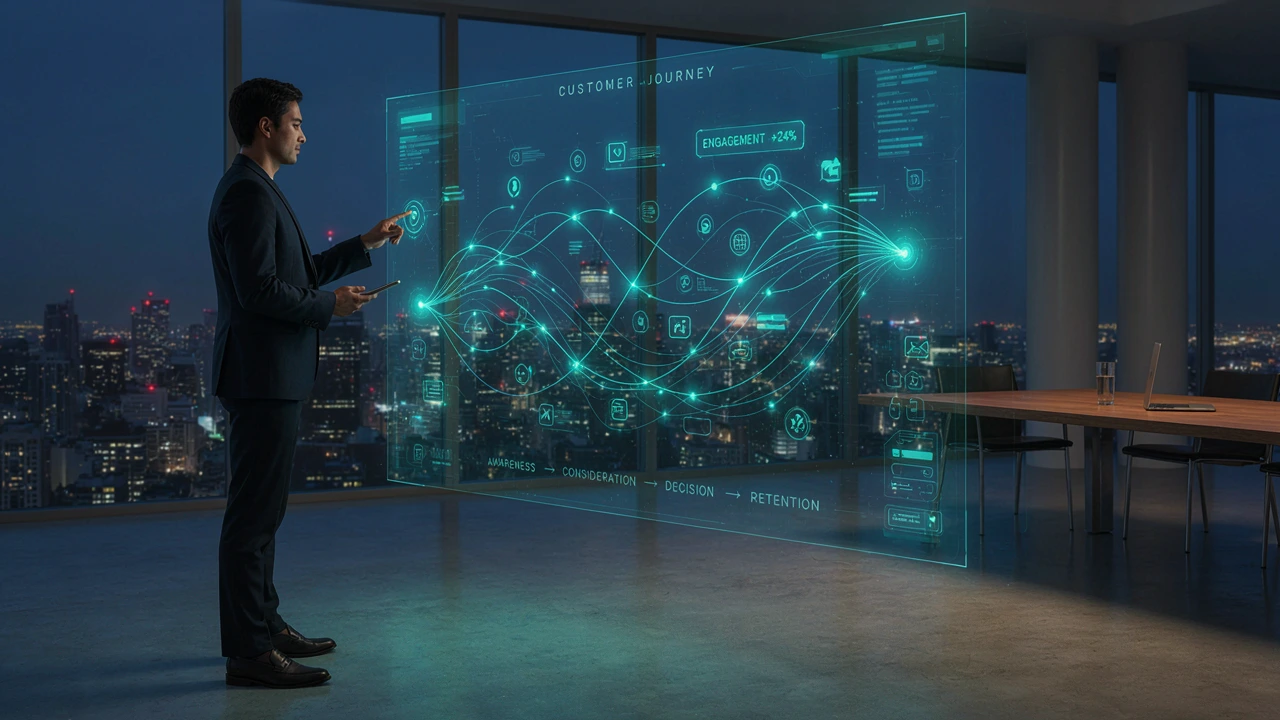
Therefore, customer experience strategies should treat mobile interactions as part of the complete customer journey rather than as isolated campaigns. A customer might discover a product through social media, visit a mobile website, receive an application notification, and eventually complete a purchase online or in a physical store.
Moreover, consistency between these interactions can strengthen trust. Brands that understand the complete journey can create smoother experiences while reducing unnecessary friction.
The Role of Data and Marketing Technology
Modern mobile marketing increasingly depends on sophisticated marketing technology. Customer data platforms, analytics systems, automation tools, artificial intelligence, and personalization technologies allow marketers to understand audiences and optimize campaigns more effectively.
Marketing trends analysis can help businesses identify changing customer behaviors and determine which channels are gaining attention. At the same time, analytics can reveal engagement patterns, conversion rates, retention behavior, and campaign performance.
However, data collection must be balanced with transparency and responsible privacy practices. Customers are more aware of how their information is used, making trust an increasingly important part of digital engagement.
Emerging Mobile Marketing Trends
The future of mobile marketing will be shaped by artificial intelligence, predictive analytics, conversational experiences, mobile commerce, and increasingly personalized content. AI can help marketers analyze large datasets and identify patterns that would be difficult to discover manually.
Additionally, emerging technologies can create more interactive experiences. Mobile augmented reality, intelligent recommendations, conversational interfaces, and context aware messaging could make customer interactions more useful and engaging.
In contrast, excessive notifications and irrelevant personalization can create frustration. Therefore, successful marketers will focus not only on reaching customers but also on delivering meaningful value at the right moment.
Future Insights for Mobile Marketing
Mobile marketing is moving toward a more intelligent and connected model where customer data, automation, creativity, and experience design work together. Brands that invest in useful personalization and seamless mobile journeys can build stronger relationships while adapting to changing consumer expectations.
The most effective approach is not simply sending more mobile messages. Instead, businesses should understand customer intent, respect privacy, measure meaningful outcomes, and continuously improve the experience. These technology insights can help marketers build resilient strategies as the MarTech ecosystem continues to evolve.
For professionals exploring marketing technology, MarTechInfoPro.com offers practical perspectives on emerging tools, strategies, and digital innovation.