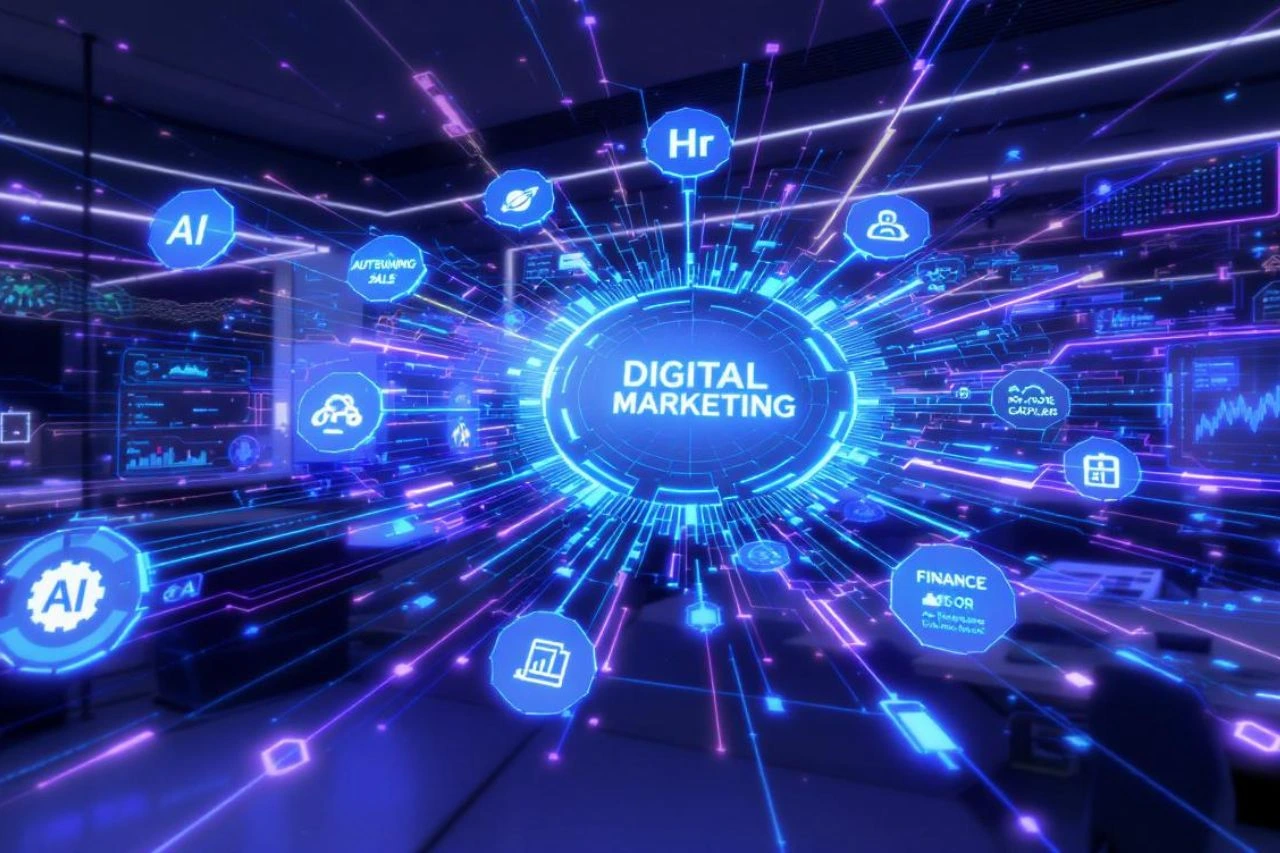
The digital ecosystem is rapidly evolving, driven by smarter platforms and deeper integration across business functions. One of the most significant developments shaping this change is interoperability AI automation and view through attribution, which is redefining how organizations connect data, measure performance, and optimize decision making. As businesses adopt advanced technology insights, the focus is shifting from isolated systems to unified intelligence layers that support real time collaboration across marketing, sales, HR, and finance functions. Consequently, enterprises are now able to build more adaptive and responsive strategies that align with modern customer expectations.
Moreover, the convergence of artificial intelligence and automation is not just improving efficiency but also reshaping how organizations interpret user behavior across channels. This transformation is creating a more connected digital environment where interoperability AI automation and view through attribution becomes central to understanding performance across multiple touchpoints.
Rising Need for Unified Digital Ecosystems
Modern enterprises are no longer operating in siloed environments. Instead, they are embracing integrated platforms that unify data across departments. This shift is largely driven by the growing importance of interoperability AI automation and view through attribution in ensuring seamless communication between systems.
Additionally, businesses are increasingly relying on technology insights to break down data barriers and enable cross functional collaboration. As a result, IT industry news frequently highlights the rise of integrated ecosystems that support unified dashboards and centralized analytics. These ecosystems allow organizations to align marketing trends analysis with real time customer interactions, ensuring more informed decision making.
Furthermore, interoperability AI automation and view through attribution plays a crucial role in ensuring that fragmented data sources are connected into meaningful insights. This allows companies to respond faster to market changes and optimize their digital strategies with greater precision.
Role of AI and Automation in Modern Marketing
Artificial intelligence and automation have become the backbone of modern marketing systems. They enable organizations to process large volumes of data, identify patterns, and automate repetitive tasks with accuracy. Within this transformation, interoperability AI automation and view through attribution is emerging as a key framework that connects marketing intelligence with operational execution.
Meanwhile, businesses are leveraging these technologies to improve sales strategies and research outcomes. Automation tools now assist in lead scoring, customer segmentation, and campaign optimization, while AI enhances predictive capabilities. Consequently, marketing teams can focus more on strategy and creativity rather than manual processes.
In contrast to traditional systems, AI driven ecosystems allow for continuous learning and adaptation. This ensures that interoperability AI automation and view through attribution remains at the core of performance measurement, enabling organizations to track customer journeys across multiple platforms with improved clarity.
Evolution of View Through Attribution in Measurement
Attribution models have evolved significantly in recent years. Traditional models often focused on single touchpoints, which limited the understanding of customer behavior. However, the introduction of view through attribution has changed how organizations evaluate engagement and conversions.
As part of interoperability AI automation and view through attribution, this approach allows businesses to capture indirect interactions and better understand the full customer journey. Therefore, marketers can now assess the true impact of digital campaigns across various channels.
Additionally, this evolution supports more accurate marketing trends analysis by connecting exposure with eventual conversions. Meanwhile, finance industry updates are increasingly reflecting the need for more precise attribution models to support budget allocation and performance forecasting. Interoperability AI automation and view through attribution ensures that financial planning is aligned with actual marketing outcomes.
Impact on IT Industry News and Technology Insights
The IT sector is experiencing rapid transformation as organizations adopt intelligent systems to enhance operational efficiency. Technology insights suggest that interoperability AI automation and view through attribution is becoming a critical component of enterprise architecture.
Moreover, IT industry news highlights the growing demand for platforms that integrate AI powered analytics with automated workflows. This integration allows companies to streamline processes and reduce operational friction.
Similarly, interoperability AI automation and view through attribution helps IT leaders gain a holistic view of system performance, enabling them to make data driven decisions with greater confidence. As a result, enterprises are better equipped to manage complexity in large scale digital environments.
Influence on Marketing Trends Analysis and Sales Strategies Research
Marketing teams are increasingly relying on advanced analytics to understand customer behavior and optimize campaigns. Interoperability AI automation and view through attribution is playing a vital role in shaping modern marketing trends analysis by connecting engagement data with conversion outcomes.
Furthermore, sales strategies and research are becoming more data driven, allowing teams to identify high value opportunities with greater precision. Automation tools help sales professionals prioritize leads, while AI enhances forecasting accuracy.
Additionally, interoperability AI automation and view through attribution ensures that marketing and sales teams operate within a unified framework. This alignment improves collaboration and enhances overall business performance by ensuring consistent data interpretation across departments.
Shifts in HR Trends and Finance Industry Updates
Human resource departments are also benefiting from integrated digital systems. HR trends and insights show that organizations are adopting AI powered platforms to improve talent acquisition, employee engagement, and workforce planning. Interoperability AI automation and view through attribution supports these initiatives by enabling seamless data sharing across HR systems.
Meanwhile, finance industry updates indicate a growing reliance on automation for financial planning and risk assessment. By integrating financial systems with marketing and operational data, organizations can achieve more accurate forecasting and better resource allocation.
Moreover, interoperability AI automation and view through attribution ensures that financial decisions are based on comprehensive and real time data, reducing uncertainty and improving strategic planning.
Future of Interoperability in Enterprise Systems
The future of enterprise technology lies in deeper integration and smarter automation. As organizations continue to expand their digital capabilities, interoperability AI automation and view through attribution will become even more essential in connecting systems and optimizing performance.
Additionally, emerging technology insights suggest that future platforms will rely heavily on AI driven orchestration to manage complex workflows across departments. This will further enhance efficiency and reduce operational silos.
Consequently, businesses that invest in interoperable systems today will be better positioned to adapt to future digital transformations. Interoperability AI automation and view through attribution will continue to evolve as a foundational element of enterprise intelligence.
Forward Outlook
The evolution of digital ecosystems is moving toward a more connected and intelligent future where systems work together seamlessly. Interoperability AI automation and view through attribution is at the center of this transformation, enabling organizations to unify data, improve decision making, and enhance customer experiences.
As technology continues to advance, businesses that embrace integrated AI powered systems will gain a significant competitive advantage. The combination of automation, attribution intelligence, and interoperability will redefine how enterprises operate across marketing, sales, HR, and finance domains.
Organizations that invest in these capabilities today will be better prepared for the next wave of digital transformation, where intelligence and connectivity drive sustainable growth.
MarTechInfoPro delivers insightful content that empowers marketing and technology decision makers to make informed and effective choices. It bridges the gap between buyers and sellers in the marketing and technology space through expert blogs, trending industry news, whitepapers, and more.