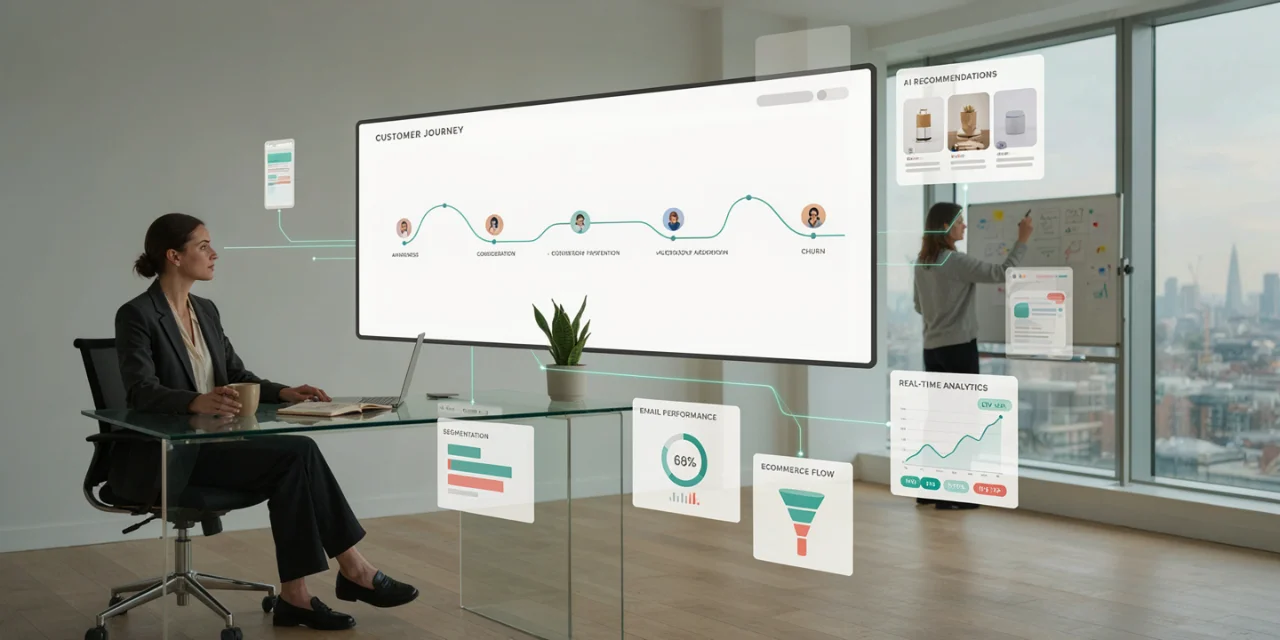
B2B marketing is becoming more focused, connected and data driven as businesses look for better ways to engage high value accounts. Instead of communicating with broad audiences using the same message, marketers are increasingly building experiences around specific companies, buying groups and business needs.
As a result, Account Based Marketing is becoming an important part of modern B2B growth strategies. Recent 2026 research from Inflexion Group found that 91 percent of surveyed ABM programs prioritize growing existing accounts, while 76 percent support specific deals and 62 percent focus on winning new customers.
This shift reflects a wider transformation across the MarTech ecosystem, where technology, customer data and personalization are increasingly connected.
AI Is Reshaping Account Engagement
Artificial intelligence is becoming one of the most significant forces influencing B2B marketing. Today, marketers can use AI to analyze account information, generate content, identify patterns and support campaign planning.
Moreover, AI is increasingly moving beyond content creation. Inflexion Group reported that 70 percent of programs actively use AI for content creation, while 63 percent plan to invest in AI powered journey orchestration.
Consequently, marketers are beginning to use intelligent technology to coordinate experiences across multiple touchpoints. This creates opportunities for more responsive campaigns while allowing marketing teams to spend more time on strategy and customer relationships.
Personalization Is Moving Beyond Basic Content
Personalization has become an important part of B2B engagement. However, modern personalization involves more than adding a company name to an email or changing a headline.
Instead, marketers are using account information, buying signals, industry context and engagement behavior to develop more relevant experiences. According to the 2026 Demand Gen Report benchmark, personalized content was identified by 47 percent of respondents as the ABM tactic delivering the highest return on investment.
Therefore, effective personalization increasingly depends on understanding the account as a complete buying group rather than focusing on one individual contact.
Buying Groups Are Becoming More Important
B2B purchasing decisions rarely depend on a single person. Multiple stakeholders may influence a purchase, including executives, technical specialists, finance teams and operational leaders.
Because of this, marketers are developing Customer experience strategies that address different interests within the same organization. One stakeholder may need financial justification, while another may want technical information or evidence of business value.
Similarly, coordinated engagement across these stakeholders can help create a more consistent experience throughout the buying journey. This makes account intelligence and audience understanding increasingly important within the modern MarTech ecosystem.
Data Is Driving Smarter Account Selection
Selecting the right accounts has always been central to successful B2B marketing. In 2026, however, data is playing an even greater role in determining where marketing resources should be focused.
Inflexion Group reported that 97 percent of surveyed programs use future growth potential as a primary account prioritization criterion. Current revenue, competitive strength and executive engagement are also considered when determining account priorities.
As a result, Data driven marketing is helping teams move away from assumptions and toward more structured account selection. Nevertheless, technology does not eliminate human judgment. The same research found that human judgment continues to play an important role in account prioritization.
Marketing And Sales Alignment Is Becoming Essential
Successful B2B growth increasingly depends on marketing and sales working toward shared account priorities. When both teams understand which organizations matter most, campaigns and sales activities can become more coordinated.
Furthermore, the 2026 Demand Gen Report benchmark found that 47 percent of surveyed organizations integrate ABM with demand generation.
This integration can help businesses connect awareness, engagement, pipeline development and revenue activities rather than treating each process as a separate marketing function.
Digital Experiences Are Becoming More Connected
Modern B2B buyers interact with brands across websites, social platforms, digital advertising, events, email and direct conversations. Therefore, businesses need connected experiences rather than isolated campaigns.
Research from Inflexion Group shows that effective programs increasingly combine digital and high touch activities. Bespoke landing pages, paid social, executive engagement, events, workshops and digital advertising are among the tactics being used across ABM programs.
Meanwhile, Digital marketing innovations are giving marketers more opportunities to coordinate these interactions and create experiences that feel relevant throughout the customer journey.
ABM Technology Needs Better Integration
Although marketing technology continues to evolve, integration remains a significant challenge. Different platforms often contain separate customer, account and campaign information, making it difficult for teams to develop a complete picture of engagement.
Inflexion Group reported that 60 percent of client facing teams in its 2026 study still lack a single source of truth for data, while 47 percent said data governance could be improved.
Consequently, businesses need to consider data quality and governance alongside new technology investments. More tools do not automatically create better marketing outcomes if those systems cannot communicate effectively.
The Human Side of AI Powered Marketing
As AI becomes more capable, the role of marketing professionals is also changing. Teams need to understand technology while maintaining strong commercial judgment, creativity and customer knowledge.
Additionally, Inflexion Group identified AI literacy and commercial acumen as areas where ABM teams have room to improve.
Therefore, organizations should invest in skills development alongside technology adoption. Human expertise remains valuable because marketers must determine which insights matter, how messages should be positioned and when personal engagement is appropriate.
The Future of B2B Account Engagement
The next stage of Account Based Marketing is likely to focus on greater orchestration, personalization and integration. Rather than simply creating campaigns for selected accounts, marketing teams are increasingly coordinating data, technology, content and human engagement around commercial objectives.
Moreover, the continued development of AI could make it easier to adapt content and experiences at scale. However, businesses will still need strong governance, reliable data and clear measurement frameworks to turn technological capabilities into meaningful business outcomes.
The evolution of Technology insights, Marketing trends analysis and customer data platforms will therefore remain closely connected to the future of B2B marketing.
Valuable Insights for B2B Marketers
The biggest shift in 2026 is that B2B marketers are increasingly treating account engagement as an interconnected business process rather than an isolated campaign. AI can support scale, data can improve account selection and personalization can make interactions more relevant.
However, technology should support a clear customer strategy rather than become the strategy itself. Businesses that combine reliable data, relevant experiences, strong sales alignment and thoughtful use of AI can build a more connected approach to B2B growth.
As the MarTech ecosystem continues to evolve, marketers should focus on creating useful experiences for buying groups while measuring engagement, pipeline and revenue alongside traditional campaign metrics.
Explore MarTechInfoPro for practical insights into customer experience, data driven marketing and the future of B2B engagement.